Shopfloor note
Prototype before production
Prototyping on the fab floor saves time, scrap and rework. We check, measure and test before running a full batch.
Prototyping stops mistakes from going down the line
On a busy fab floor, there’s rarely a second chance to fix an error once production starts. Prototyping gives you a controlled way to test a new jig, bracket or gate panel without risking scrap on the full batch. It’s especially important when drawings are still being tweaked or the customer sent a photo instead of a proper sketch.
In our workshop, taking the time for a prototype build lets us double-check dimensions and fitting before the rest of the team commits to cutting and welding. A good prototype catches misread drawings, wrong material thickness, and fit-up issues early. This saves cost and materials, but more importantly keeps the shop’s schedule on track.
How we prototype before production in practice
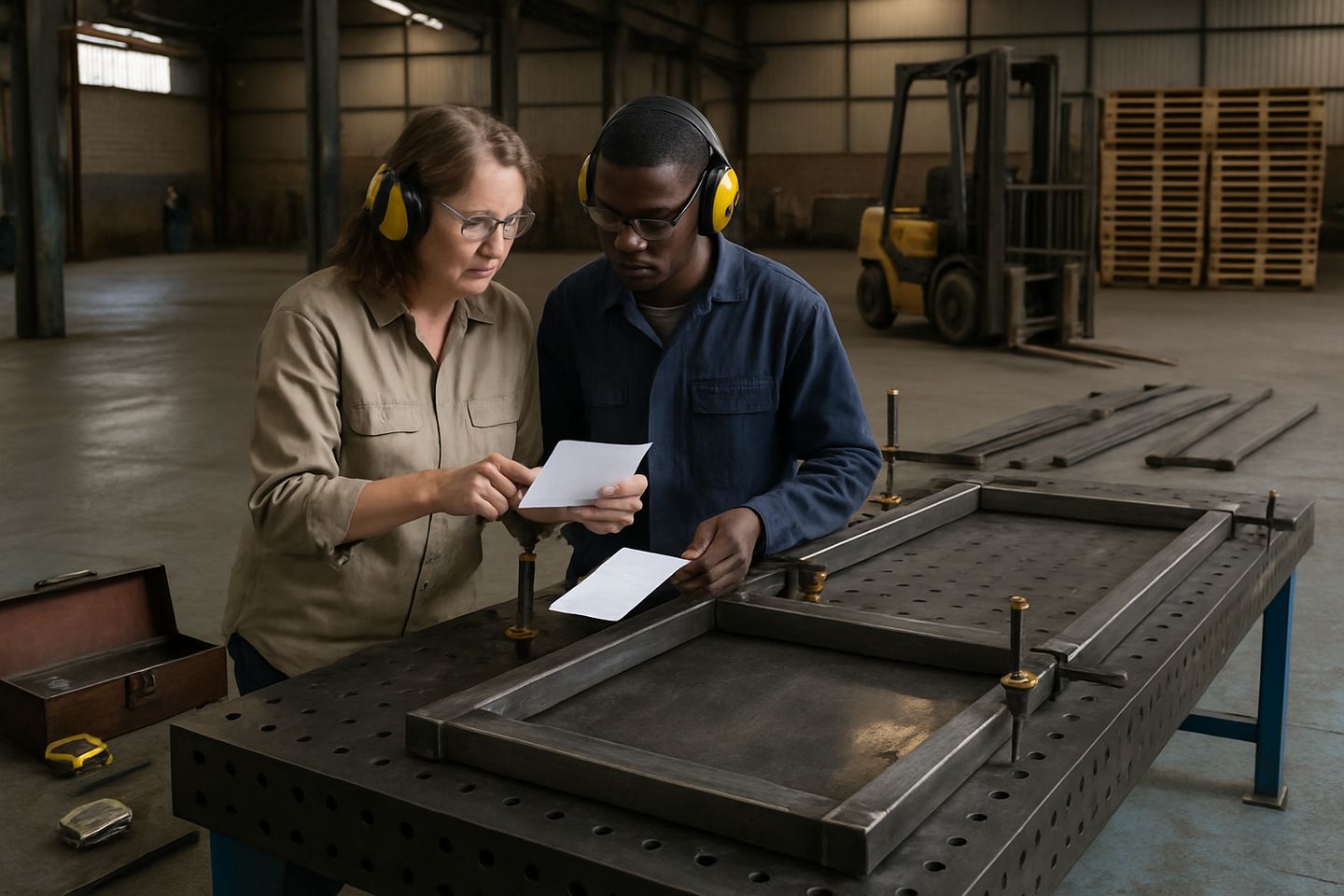
First, we clear enough bay space for a mockup. Set up with a BenchMaster Pro or Layout Table XL for a flat, square surface. Gather your materials, not forgetting offcuts or substitute parts if the real ones are delayed.
Next, use the MeasureKit Fab to check all key sizes, don’t trust a tape alone, use the callipers for slots and holes. Tack the main parts only, and clamp assemblies with the ClampRail System or JigKit Modular plates. Mark any changes directly on the prototype using recipe tags or marker, and snap a few photos or sketches for the job card.
Before final welding, fit tested assemblies onto the actual part or frame if possible. Check again with a fillet weld gauge and square. Only move to batch cutting or welding when everyone agrees on the prototype and it's signed off in the shift log.
- Clear the bay and prep materials
- Measure with calipers and squares, rather than only a tape
- Tack and clamp, check fit before welding
- Record any changes or problems found
- Get sign-off before starting batch work
Catch mistakes before they cost you time or material
It’s easy to rush and think you’ll spot problems on the next piece, but a small alignment error or swapped dimension can sneak through. Watch for doubled parts that don’t match, bolt holes that wander, or welds that shrink and pull things out of square.
A common slip is forgetting to zero the caliper after measuring something else, this can throw the whole prototype out by a couple of millimetres. Always double-check strange gaps, binding hinges, or anything that fights the jig. If you see a run of scrap or repeated rework, stop and review the last prototype against the drawing.
Bring prototyping into your toolbox talk
Prototyping is a habit, rather than only an R&D step. In toolbox talks, show the team a recent prototype and ask what went wrong or right. Discuss why measuring and sign-off matter, and let apprentices handle the MeasureKit Fab to build confidence.
If your shop keeps running into the same fit-up or rework issues, it might be time to review your prototyping method. Send us a message about your current bay setup or if you want a demo on layout or measurement gear. Sometimes a small tweak saves hours down the line.