Shopfloor note
Earth paths that stay short
A short earth path is one of the simplest ways to keep your welds clean and your MIG bay running smooth. Here’s how to check, clamp and keep it safe every shift.
What can go wrong with a long earth path
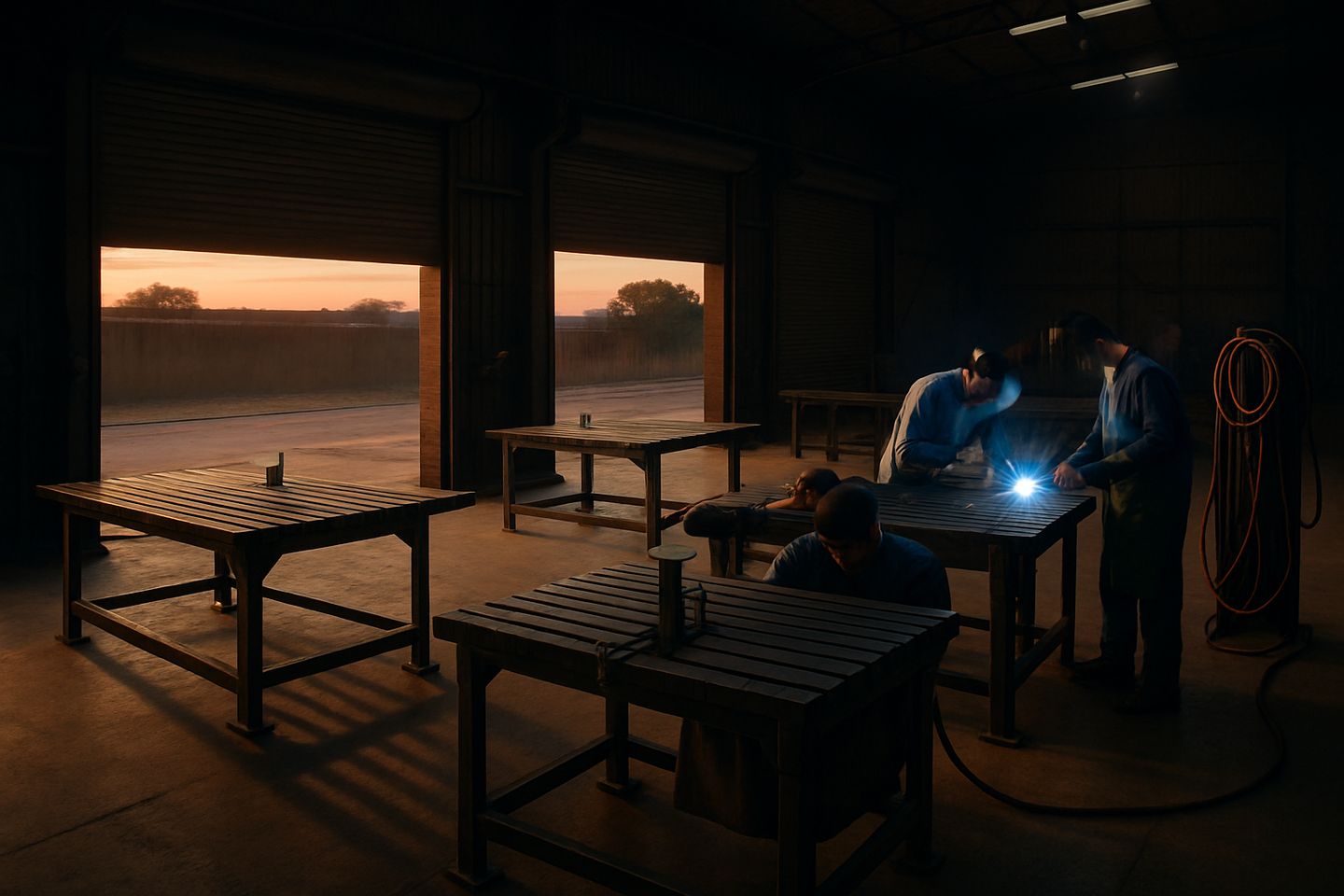
On our fab floor, a long or dodgy earth return is trouble waiting to happen. You get arc blow, spatter, erratic starts and sometimes even faults on the MIG or TIG set. The arc struggles, tips wear out quicker and you end up with welds that need grinding or rework. In a busy yard with mobile jobs or quick changeovers, earth leads get dragged, looped over the wrong bench, or left dirty at the clamp. Welders often blame the machine or the wire, but a poor earth path is one of the first things I check when teaching new starters.
SANS 2001-CS1 sets the quality bar for structural steelwork, but none of that holds if the earth path is routed badly. Safety wise, a lead across the walkway or through a chain or hinge can heat up, arc out or trip someone trying to shift a bakkie load of steel. On big jobs, especially pipe or trailer builds, a long earth path can cause enough voltage drop that you see visible brown tracks around the weld. It does not matter if you’re on a fancy bench or a patch of concrete, the rule stays the same: keep the return short and direct.
Step by step for a short, solid earth path
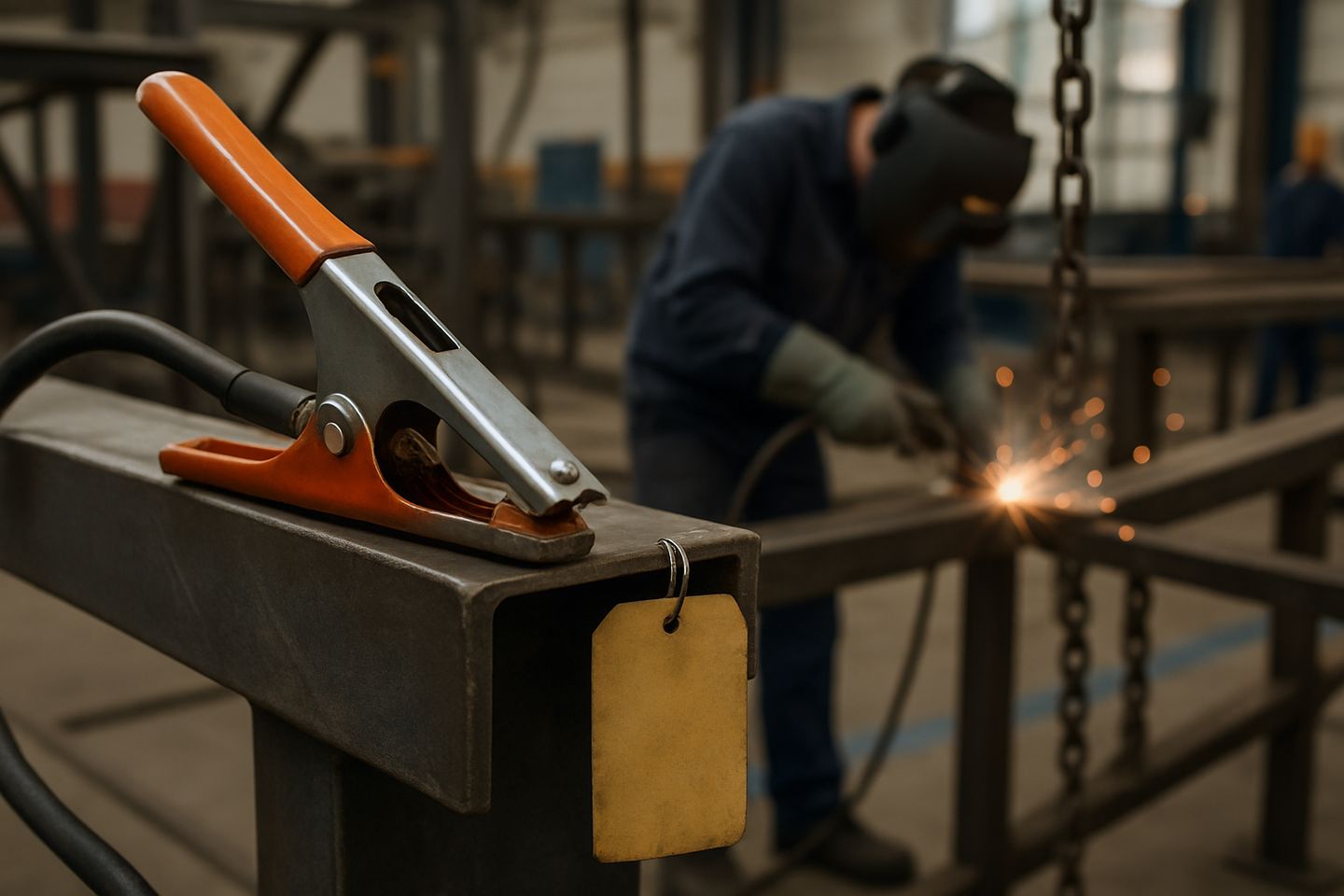
First, inspect the return cable for cuts, burns or heat marks at the lugs before you even connect. The EarthBond Kit in our bays has both 35 and 50 square millimetre cables with 600 amp clamps, which is more than enough for most shop jobs.
Clamp the earth as close as possible to the weld, directly on bright clean steel. If the part is large, move the return clamp with you as the weld position shifts. On a BenchMaster Pro, use the M10 earth studs for a positive connection when you clamp to the bench top, don't forget to tighten properly. Never clamp to a painted, rusty or oily surface. Always check for solid contact: a quick tap with a hammer or wire brush cleans the spot.
Never route the earth through hinges, bearings, chains or use the frame of another bay. Avoid looping the cable over walkways or under the job where it can get damaged or run over by a trolley.
- Keep the earth clamp as close to the weld as you can
- Clean the contact point to bare, bright steel
- Never use moving parts or bench frames as earth paths
- Inspect lugs and cables for heat damage each shift
- Shift the clamp on big jobs as the weld position changes
Common mistakes and how to spot them
One of the main things I see is the clamp stuck on a handy surface two metres away from the weld, sometimes even on a sawhorse or offcut. That adds resistance and can even melt a spot if the contact is poor. Another slip is clamping straight to a painted or oily patch, then wondering why the arc is erratic.
If you see fine brown tracks around your weld, or get complaints of arcs that 'hunt' or machines cutting out, check the return path before you blame the welder or the wire. Feel the cable and lugs after a run, they should be warm, not hot. If you spot sparks at the clamp or the cable jumps when you strike up, you likely have a loose or dirty earth.
Bringing this into a toolbox talk or training
Short earth paths don’t need a big lecture. Show new welders and helpers exactly where to clamp, how to check with a hammer or wire brush, and where not to route the return. Mark up good clamp points on benches and jobs with a dab of yellow paint or a tag, and make it part of your pre-weld checklist.
If you see ongoing arc faults, or want a demo with our EarthBond Kit, send us a message on our contact form. We can also help set up practical training for safe return paths and troubleshooting earth faults, especially for trainers or teams working across multiple bays.