Remnants
ScrapRack Lane
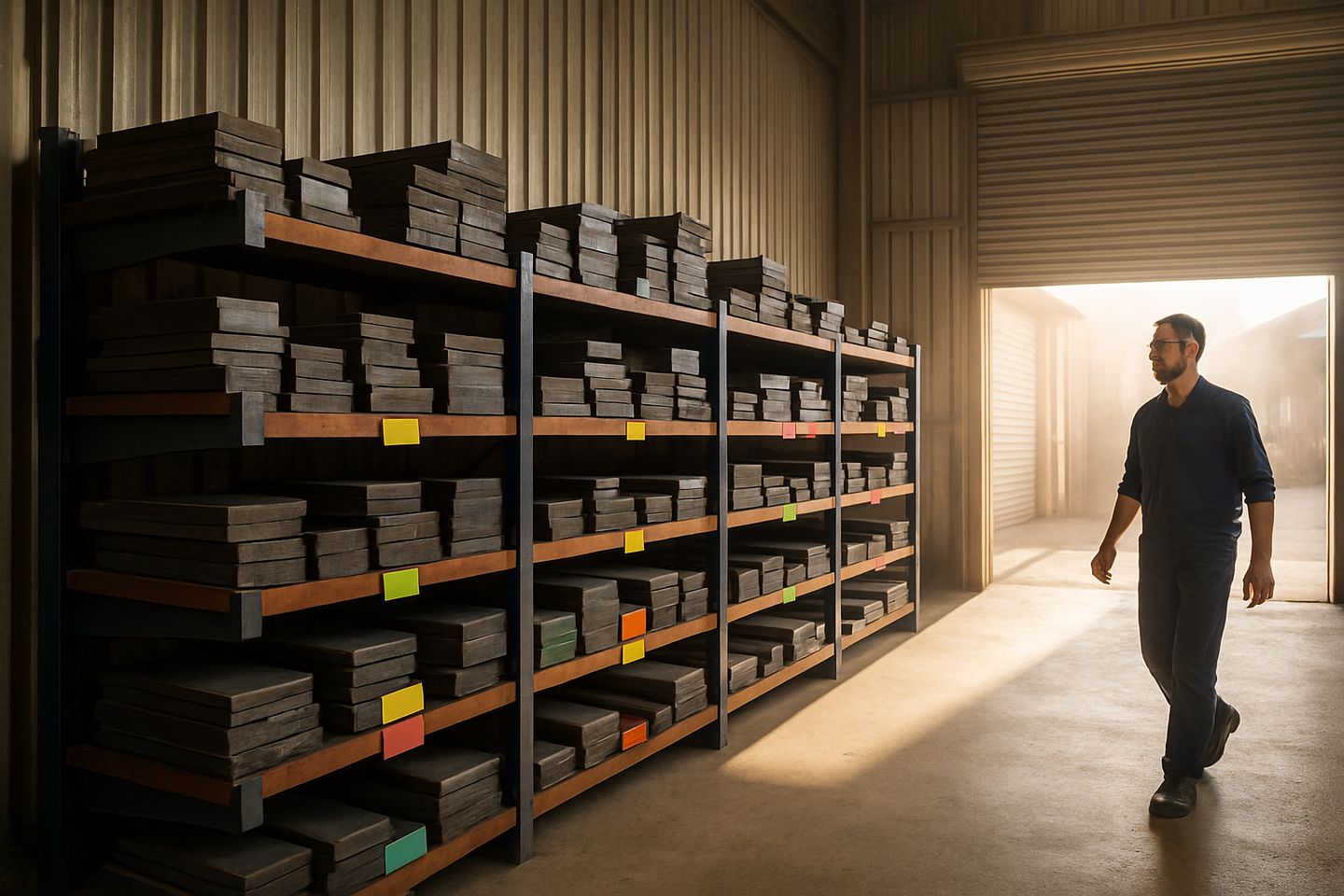
ScrapRack Lane keeps your plate and sheet remnants sorted by thickness and easy to access, cutting scrap waste and keeping your shop floor clear.
What ScrapRack Lane does for your shop
ScrapRack Lane is a heavy-duty storage rack designed for managing plate and sheet metal remnants in fabrication, cutting, and repair shops. Each rack gives you 6 to 10 separate lanes, each tagged by colour and millimetre thickness, so your teams can quickly see what stock is on hand. This system suits yards cutting mild steel, stainless, or aluminium for gates, trailers, HVAC ducting, signage frames, or machine repair, anywhere offcuts pile up and fight for space.
With 120 mm fork clearance, you can move full racks with a pallet jack or bakkie tail-lift. Each lane holds up to 800 kg, so even thick plate remnants or large odd shapes are no problem. Finance and stores teams also prefer lanes with proper tags, as it gives a clear view of what is usable and where it sits.

Setting up a bay with ScrapRack Lane
Most teams set up ScrapRack Lane near the cutting, welding, or layout zones, pairing it with a BenchMaster Pro for measuring and marking, and a Consumable Cart for quick access to discs and tags. The rack itself comes with tag holders for colour and millimetre thickness packs, so every lane stays labelled, even when the floor team is busy.
Some shops add a Layout Table XL for nesting parts out of remnants, or a PPE Station Bay close by to keep gloves and face shields at hand when shifting larger offcuts. Angle block sets and square fence kits help with pre-marking before the next cut. Don't let plates sit leaning against walls or lying loose, move them straight into a tagged lane and your crew will thank you later.
- Place near guillotine, plasma, or Oxy-fuel stations
- Use tag packs to sort by size and job type
- Add earth bond and spark skirt kits where hot work happens
Safety and conditions to watch for in SA shops
Loose and unmarked scrap are a top trip hazard on shop floors, especially when offcuts gather near walkways or cutting zones. ScrapRack Lane keeps remnants upright and separated, so no one needs to dig through piles or risk a finger under a shifting plate. All lanes are designed for forklift or pallet jack clearance, reducing manual handling and pinched hands.
South African conditions bring rust, dust, and humidity to most yards. In coastal areas like Durban or Gqeberha, condensation means rack screws and tags can rust if not checked. On the Highveld, winter dust settles fast, so a regular wipe-down and inspection keeps labels visible and prevents dirt build-up. SANS 10019 applies for any gas cylinder storage nearby, keep racks and cylinders apart or behind a barrier.
How to check if this rack fits your floor
Measure your available floor space around cutting and welding bays and check if you have 120 mm of clearance for pallet jacks or forklifts to access each lane. Count your average remnant volume and range of thicknesses, 6 to 10 lanes suit most small to mid-size shops, but high-mix laser or plasma yards may want more than one rack.
If your floor often sees large offcuts, odd shapes, or heavy plate, make sure your fork capacity and lane load rating match up. Ask your team if tagged lanes will save them time finding usable drops for repeat jobs. If you want to see a rack in use, send us a message and we can book a visit to our fab floor in Germiston or an appointment showroom.