
ScrapRack Lane fixtures
ScrapRack Lane fixtures keep steel remnants sorted, offcuts handy, and batch work moving on real South African fab floors.
Which ScrapRack Lane fixtures to use and why
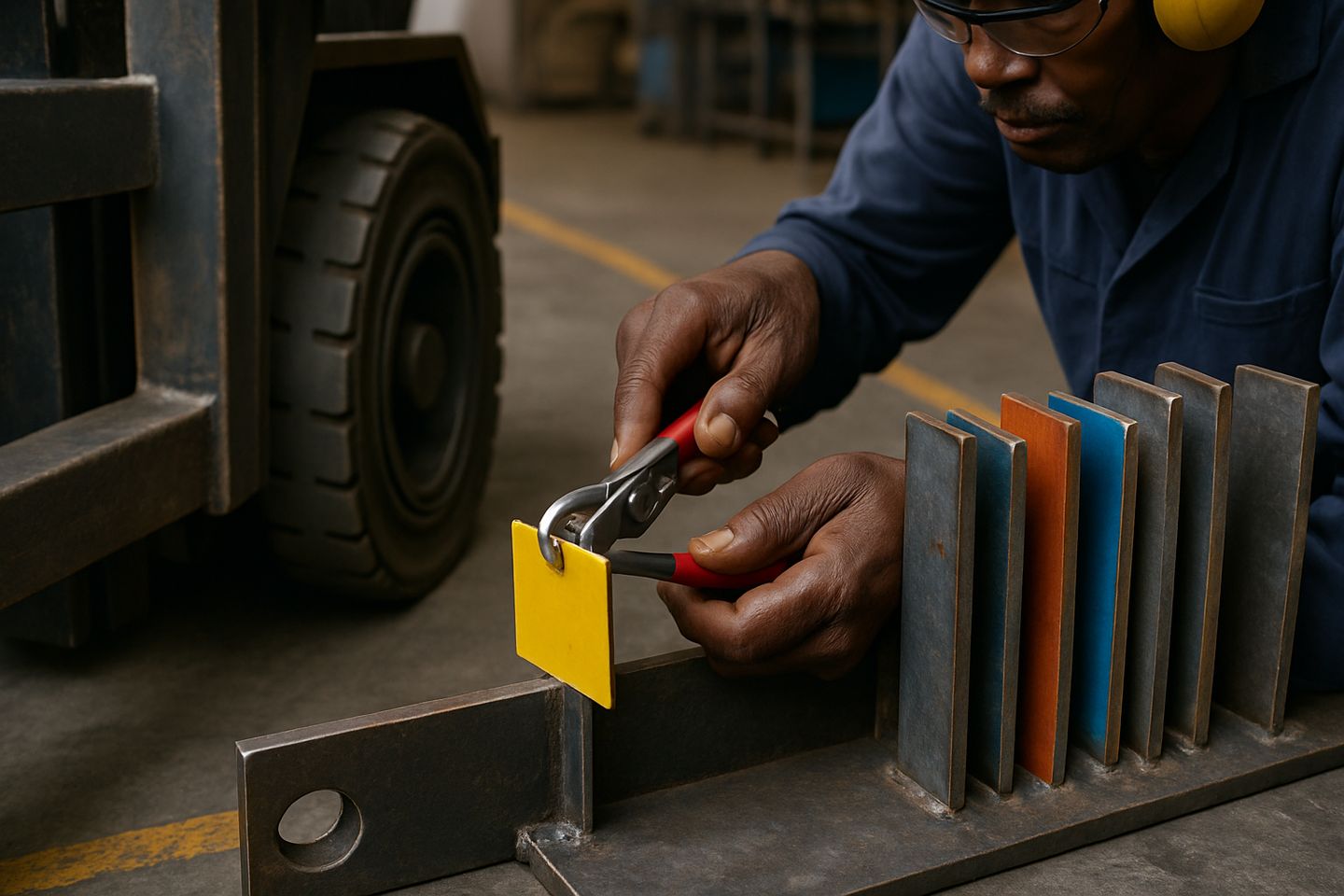
Our most-used fixtures for ScrapRack Lane are the thickness tag pack, colour-coded tags, and fork clearance blocks. The thickness tag pack helps you sort offcuts by size, so no more digging for a 12 mm plate in a pile of 5 mm sheets. Colour tags speed up the handover between shifts, making it obvious where each material goes and what is still usable.
The fork clearance blocks keep the rack accessible for pallet jacks or bakkie loading. Use the kanban card set to flag lanes that are full or need clearing. Each fixture is designed for actual daily use, rather than only tidy storage. In coastal yards, rust can creep up on bare plate edges and clamp screws, so keep your tag packs and blocks dry and check for corrosion weekly.
- Thickness tag pack for mm sorting
- Colour tags for fast ID
- Fork clearance blocks
- Kanban card set for workflow
Setting up a repeatable fixture arrangement for batch work
For repeatable batch jobs, set each ScrapRack Lane with dedicated tags and card holders at both entry and exit ends. Lay out the lane order by most-used thickness, so your 6 mm and 10 mm slots are nearest to cutting benches or welding bays. Place thickness tags on the front lip and colour codes on the lane uprights for quick checks.
Use lane dividers to keep narrow offcuts upright and safe. Mark a minimum keep length at the base of each lane with tape, so scrap does not clog up with unusable pieces. Kanban cards are best kept in a clip box on the end post, this way, anyone can flag a lane needing attention without hunting down a marker or sticky note.
- Tags at both ends for handover
- Order by most-used plate first
- Min. keep length marked
- Lane dividers for safety
Common mistakes with fixtures seen on South African floors
We often see shops skipping tag packs or using faded hand-written notes, this leads to scrap mixing, wasted time, and frustration during stocktake or shift change. Another regular mistake is squeezing too many offcuts into one lane, causing jams and bent dividers. Stick to the rack's rated lane loading (up to 800 kg per lane) and avoid stacking sheets beyond the divider height.
Some teams use makeshift wood wedges or leave fork clearance blocked with stray offcuts, risking injury and making machine access harder. All fixtures should be checked every Friday: make sure tags and cards are readable, dividers are not bent, and fork access is clear. SANS 10019 rules still apply if you store LPG or oxy-acetylene bottles nearby, no racks blocking safe gas bottle handling.
- No faded or missing tags
- Do not overload lanes
- Keep fork access clear
- Inspect fixtures weekly