
Job path
HVAC sheet
HVAC sheet work on the floor means cutting, bending and assembling ducting, brackets and supports with tight fit-ups and shift-ready routines. Every part needs clean edges and right-first-time marking.

The basics of HVAC sheet jobs
HVAC sheet work covers everything from rectangular duct runs to spiral sections, plenum chambers, bends, brackets and support hangers. Most jobs use galvanised or mild steel sheet, with thicknesses from 0.6 to 1.6 millimetres, sometimes aluminium for coastal sites. Accuracy counts most in cut lengths, notched corners, hole positioning and flange squareness. A 2 millimetre slip on a flange means a duct bay or damper won't seal tight, and a missed hole can cost hours on site.
Part edges must be clean and free of burrs, especially for pressed seams and spot welds. Site-ready hangers, angle brackets and gussets often come from offcuts, so keeping track of remnant sizes and avoiding waste is a big part of the job. Speed matters but so does repeatability: jobs come in batches and one wrong pattern can spoil a run of twenty.
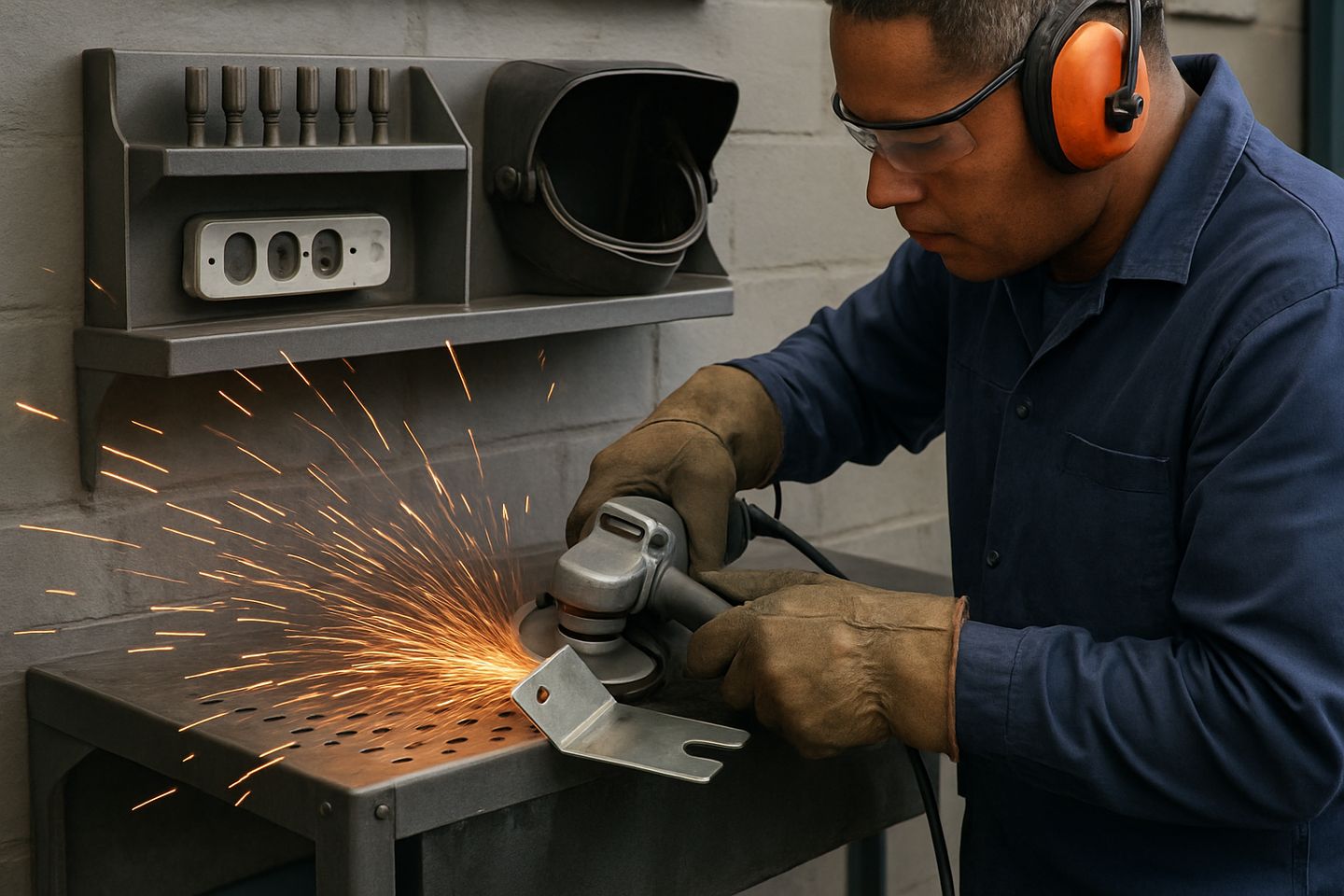
FabMaster gear for clean layout and holding
BenchMaster Pro is built for HVAC sheet bays. Its flat, ground top lets you clamp up box sections or lay out duct corners with zero wobble. The 50 millimetre dog-hole grid takes angle blocks and soft jaws, making it easy to hold sheet without twisting or scratching coatings. For small bends and bracket making, JigKit Modular gives you quick setup with slotted plates and angle blocks at 30, 45, 60 and 90 degrees.
Use MeasureKit Fab for marking out folds, flange lengths and hole centres, its squares and callipers fit inside most duct profiles and the fillet gauge checks welds and spot tacks. ScrapRack Lane keeps remnant sheet, angle and flat bar off the floor and sorted by thickness, so you don't waste time searching for a 1.2 millimetre strip or cut the wrong piece. Keep an earth bond plate close for TIG or MIG work and check cables before any shift.
- BenchMaster Pro: stable, flat and earth-ready work surface
- JigKit Modular: quick angle setup for brackets and ducts
- ScrapRack Lane: remnant and offcut control
- MeasureKit Fab: accurate duct and bracket layout
Running HVAC sheet work in local yards
Batch work is the reality in HVAC sheet bays, even if site calls only drip in every few days. Mark patterns and label brackets with recipe tags or marker pens at the bench, then stack in sequence to avoid mixups. Keep shift log cards for bigger runs and double-check measurements before tacking corners. For SANS 2001-CS1 jobs (structural steelwork), certain welds or bracket types may need a weld record or inspection before despatch.
Inland, dust control matters, wipe tops before layout and keep covers on parts ready for painting. Coastal shops in Durban, Cape Town or Gqeberha must check for rusty clamp screws and blotches on bare steel. Summer storms and short power cuts can stop shears or seam welders suddenly, so plan the queue for what you can finish by hand if needed.
Mistakes that mean rework and delays
The most expensive rework in HVAC sheet is from poor marking or mismatched holes, especially when hangers and ducts arrive on site and won't fit. Forgetting to deburr or smooth edges leads to cut hands and poor seals. Bundling the wrong thickness bracket into a site pack can mean a whole batch comes back for fixing.
Don't skip clamp checks: a bent or loose clamp can bow thin sheet and ruin flanges. Always tag offcuts and keep paperwork together for mixed jobs, lost records mean site queries and wasted time. Small slips, like missing a recipe tag or using the wrong side of the pattern, are what usually creep in when pressure is on.
- Measure every marked hole and flange before tacking
- Deburr all cut edges for safe handling
- Store offcuts and brackets by thickness and size
- Tag batches and keep weld records if required
Typical starting kit
Shopfloor note: Remnant lanes that finance likes