Job path
Education workshops
Education workshops train students and apprentices in real welding, grinding and layout work, preparing them for hands-on roles in South African industry.
What education workshop training involves
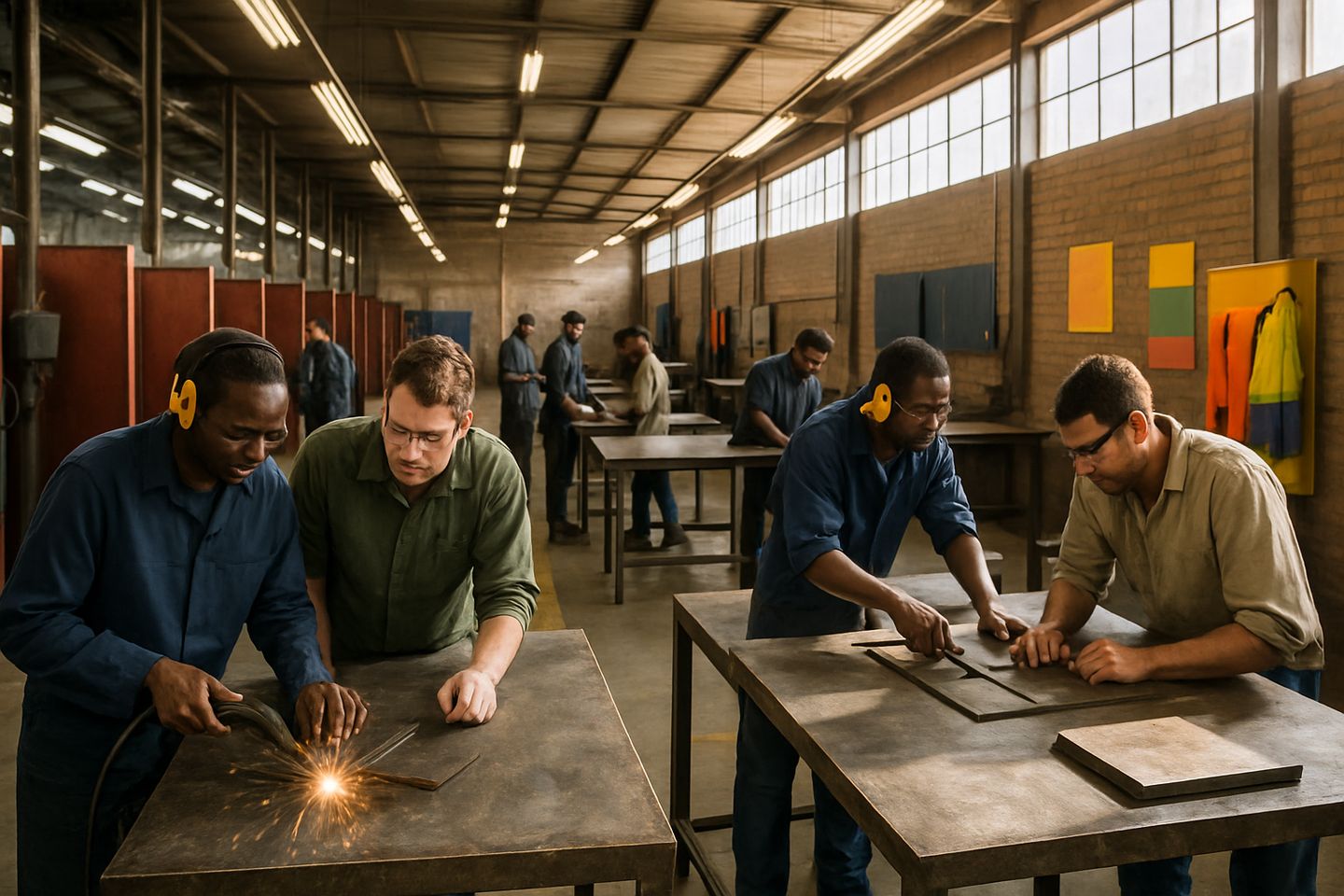
Education workshops in fabrication focus on hands-on tasks: cutting, fitting, tacking and welding mild steel, plus basic grinding and layout. Typical parts include frame mock-ups, angle brackets, short beams, plates with holes or slots and simple pipe sections. Accuracy matters for square fits, correct weld runs, and clean marking, trainees learn to measure, clamp and check their own work before an assessor inspects it.
Work often uses 2 to 8 mm mild steel plate, square tube, angle iron and flat bar. Sometimes aluminium or stainless is added for advanced modules, but most TVET practice starts with mild steel for cost and safety. Fillet welds, tee joints and mitres are common. Trainees need to spot distortion, keep off-cuts organised and mark up their parts with chalk or tags.
FabMaster gear and fixtures that fit best
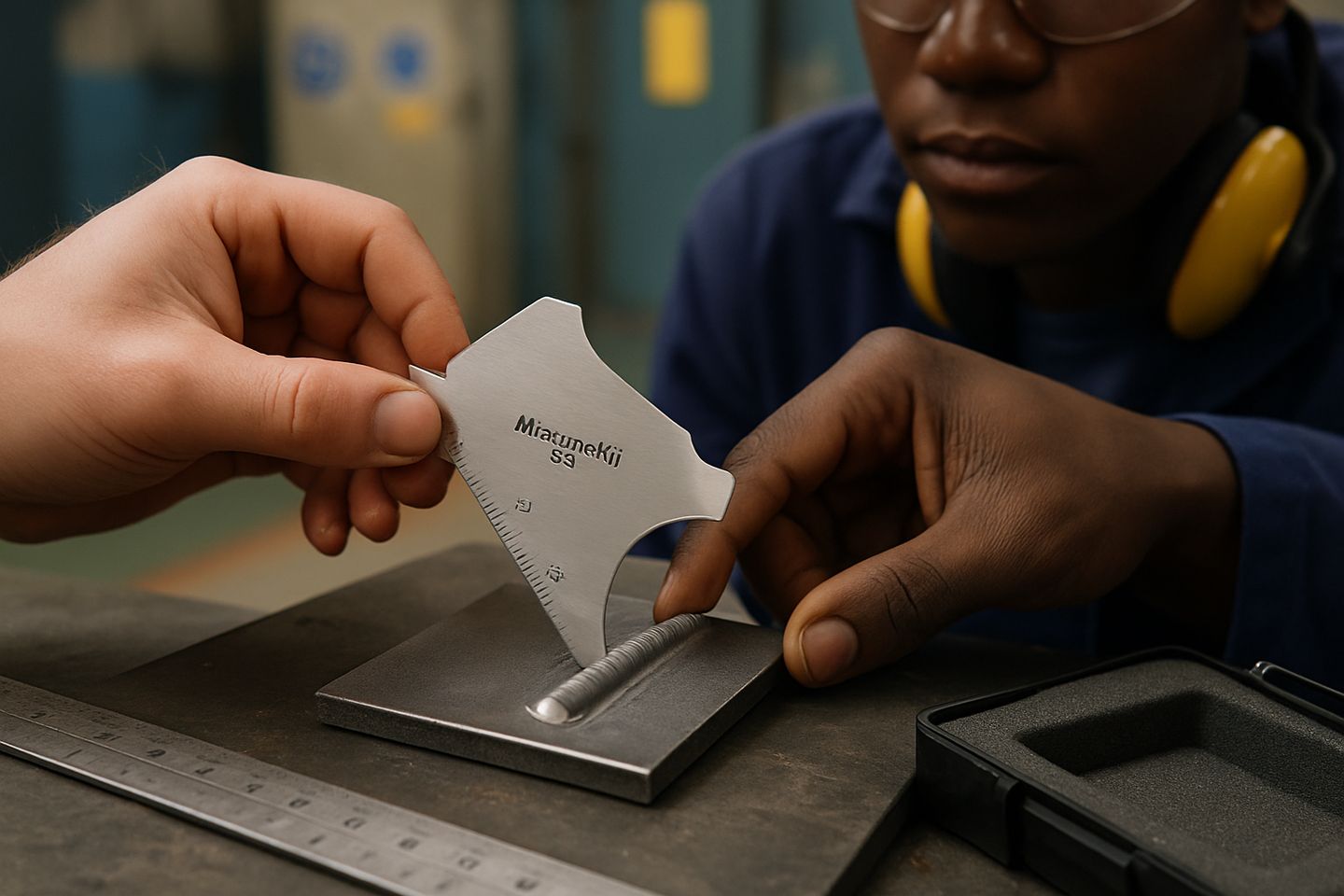
Our TrainBay Starter is built for practical training, compact, clear, and split into weld, grind and layout zones so each learner gets safe access to what they need. BenchMaster Pro benches give a solid, square surface for clamping and welding small assemblies, with dog-hole grids for repeatable setups and built-in M10 earth studs for a safe return point. MeasureKit Fab covers daily checking with callipers, squares and a fillet weld gauge set in a foam case learners don't misplace easily.
ClampRail System rails and JigKit Modular blocks make it simple to teach repeat setups or change between joint types. TorchBay Station sets up oxy-fuel or plasma cutting safely, with spring-return hose reels and a clear tip rack. For grinding, GrindDeck Safe keeps sparks and dust under control, protecting both trainees and their neighbours.
How to run an education bay well in South Africa
Batching learners by skill level or module keeps the floor safe and makes assessment easier. Set a clear routine: start with a layout check, tag off-cuts, check PPE, then weld or grind under supervision. Coastal sites like Durban and Gqeberha need to keep clamps dry and oil steel tops to fight rust from humidity. Inland (like Joburg or Bloemfontein), dust and grit are the main enemies, wipe surfaces down before starting, and keep return clamps clean for a solid earth.
Record-keeping matters: keep shift cards and weld records up to date. Inspections must include checking that cables and hoses are undamaged, that screens are in place, and that SANS 10019 rules for cylinder storage are followed. Plan for short power cuts, queue tasks so learners can keep marking or checking during downtime, and always check safe restarts before switching grinders or welders back on.
- Group trainees by skill and module
- Log welds and checks each shift
- Oil and wipe benches based on weather
- Store cylinders upright and chained
- Inspect PPE and cables before each batch
Costly mistakes and how to avoid them
Skipping safe setups leads to most rework. If students don't clamp parts squarely or mark out correctly, welds go off-line and grinding runs long. Always check clamps and tags before fitting up. Letting cables, clamps or earth leads get damaged by dropped tools or wet storage causes faults and safety risks, these must be checked daily.
Poor record-keeping brings failed assessments and wasted metal. Weld records and shift cards save time when tracking progress or tracing issues. Never let gas cylinders stand loose or mixed, stick to SANS 10019 for storage, and double-check for flashback arrestors at both ends. Teach learners to check disc ratings and guards on grinders each time.
- Never weld without a proper earth return
- Don’t rush fit-up, check squareness first
- Keep cylinders apart and capped
- Inspect welding and grinding PPE daily
Typical starting kit
Shopfloor note: Apprentice zones that teach