Shopfloor note
Municipal spark logs
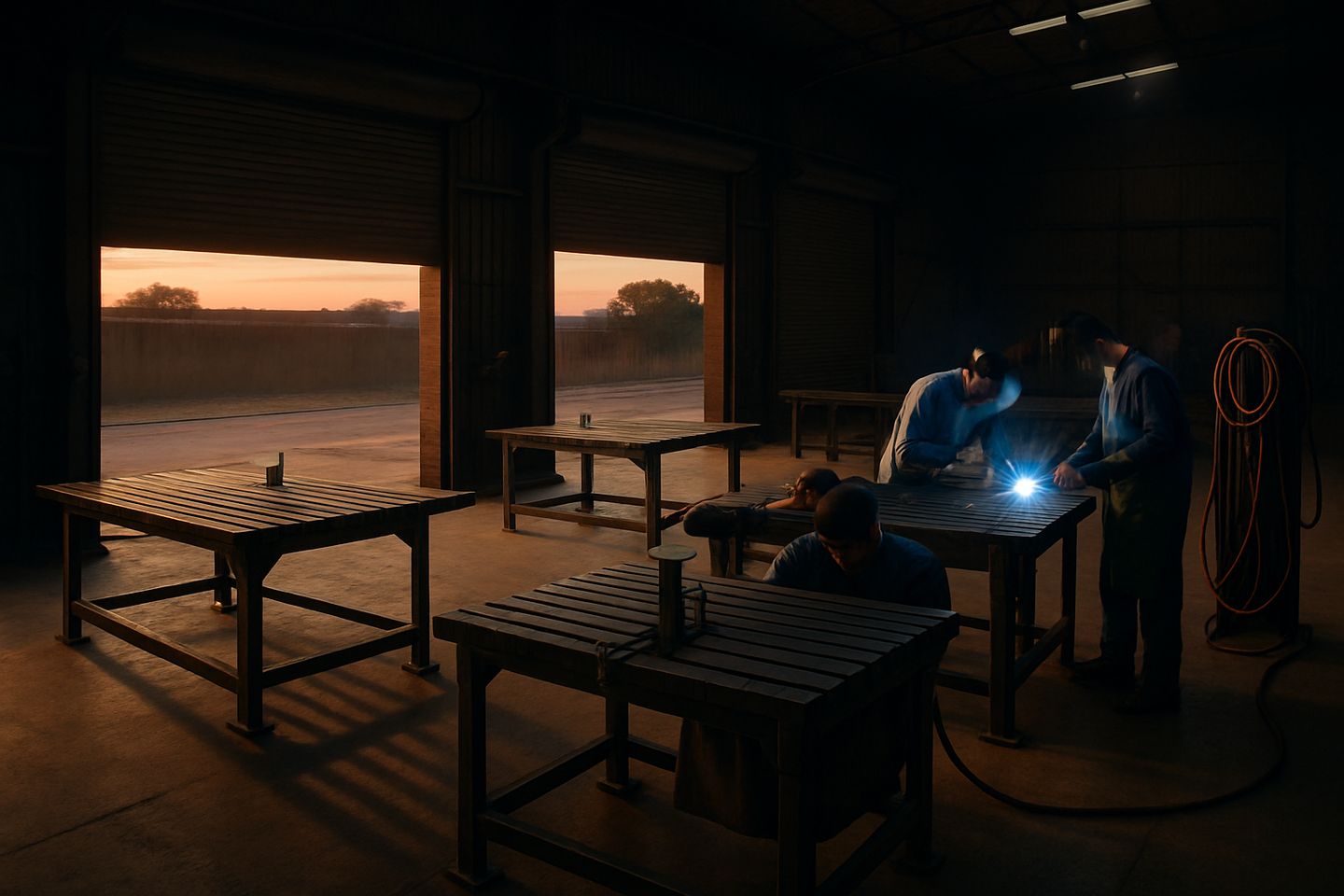
Municipal spark logs help us keep track of welding and grinding safety in shared bays, where crews change often and jobs vary daily.
Why shared bays need spark logs
In municipal yards, parks depots and training bays, you get a different mix of welders every shift. Crews might come and go, jobs change from gate repairs one day to playgrounds or bakkie trailers the next. Without a reliable system, it's easy to miss a safety step or forget what was last done at a busy bench.
Spark logs give us a simple way to document every weld job or repair in the shared bay. By logging checks before and after hot work, we cut down on confusion when the next team steps in. Even with high apprentice turnover or rotating supervisors, a well-kept spark log means anyone can see what was signed off, who checked the PPE, and when the last earth bond was inspected.
How to use spark logs in the municipal workshop
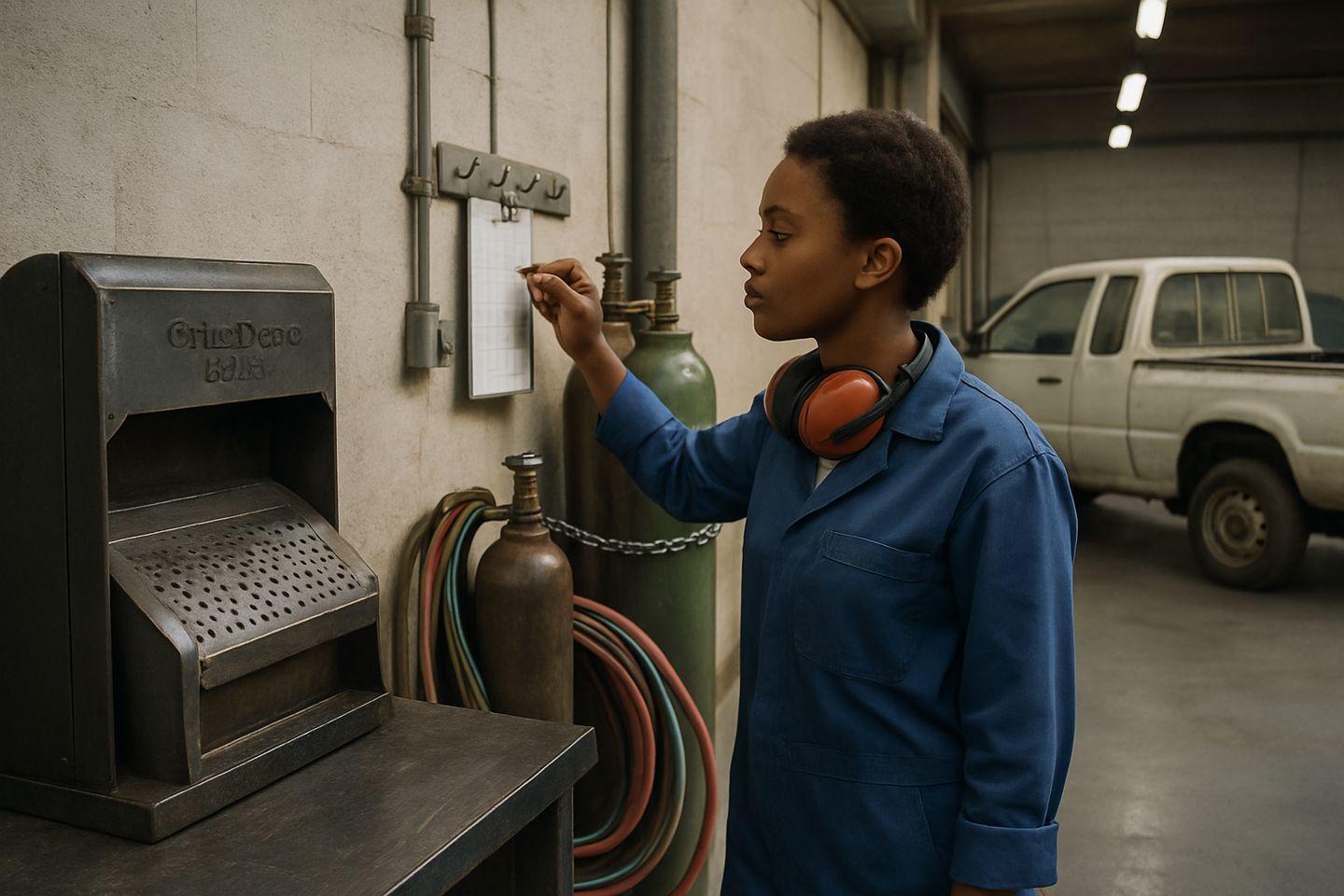
Start each shift by opening the bay's spark log card on the bench, next to the PPE rack or GrindDeck Safe if you have one. The first crew member signs off the basic checks: screens and guards in place, earth return clamped right, hoses and cables not damaged, and a fire extinguisher easy to reach. Each welder signs for their own PPE and checks the grinder guard before starting up.
During the job, make a quick note of any swaps, if you change a grinding disc or move the earth clamp to a new part, mark it. At the end of the job, whoever finishes up does the final check: spark skirt down, bay tidy, scrap into the ScrapRack Lane, and cylinders shut. For longer jobs or after lunch, the next operator signs in and repeats the routine. Keep the log on hand for any supervisor, safety officer or inspector walking through.
- Sign for PPE, screens and bench checks before starting.
- Log swaps like disc changes or earth clamp moves.
- Tidy the bay and close off the log after the job.
- Repeat checks with each crew or operator change.
- Keep the log available for inspection.
Common mistakes that slip into busy shifts
The most common slip is forgetting to check if screens are actually in position or just leaned against the bay. Sometimes the earth clamp gets left on a rusty part, or someone forgets to check the cable lugs for heat damage. Another easy mistake is not logging tool swaps, especially when only one grinder is shared between two benches.
A rushed team may also forget to shut LPG or oxygen cylinders properly, or miss that a fire extinguisher has already been used and not replaced. Its worth taking twenty seconds at handover to run down the checklist together and avoid crossed wires.
Using spark logs in toolbox talks and feedback
Bring spark logs into your toolbox talks, especially before a new job type or when the crew changes. Read through the last job’s log together: was every section signed, were there any near misses or missing PPE, did everyone tidy up? This way you turn the log from a paperwork chore into a learning tool.
If you want us to help set up your spark log system, or make cards that match your yard and shift patterns, send us a message through our contact form. That way we can print cards with your bay layout, key checks and even tags for your GrindDeck or ScrapRack. Practical feedback from the floor helps us improve what works for real municipal teams.