Shopfloor note
Jig recipes before the weld
A jig recipe keeps every job accurate and repeatable, avoiding wasted time and remakes. Here’s how we set up and check jigs before striking the first arc.
The risk of skipping a jig recipe
If you rush into welding without a jig recipe, you risk trailers with twisted drawbars, gate frames that close with a gap, or gussets pulling out of square. Even on simple jobs, a missing clamp or a small shift can mean a pile of rework when parts won't fit at assembly.
On real floors, especially with mixed work or new staff, accuracy drops fast unless every step before welding is methodical. When the next shift picks up a half-done frame, unclear set-ups or wrong tags can ruin a day’s work. The right recipe locks down dimensions, checks, and tags so every job stays true. When you see a yard with drifted frames or fighting the same faults each week, the jig recipe is missing or ignored.
Our method for jigging before a weld
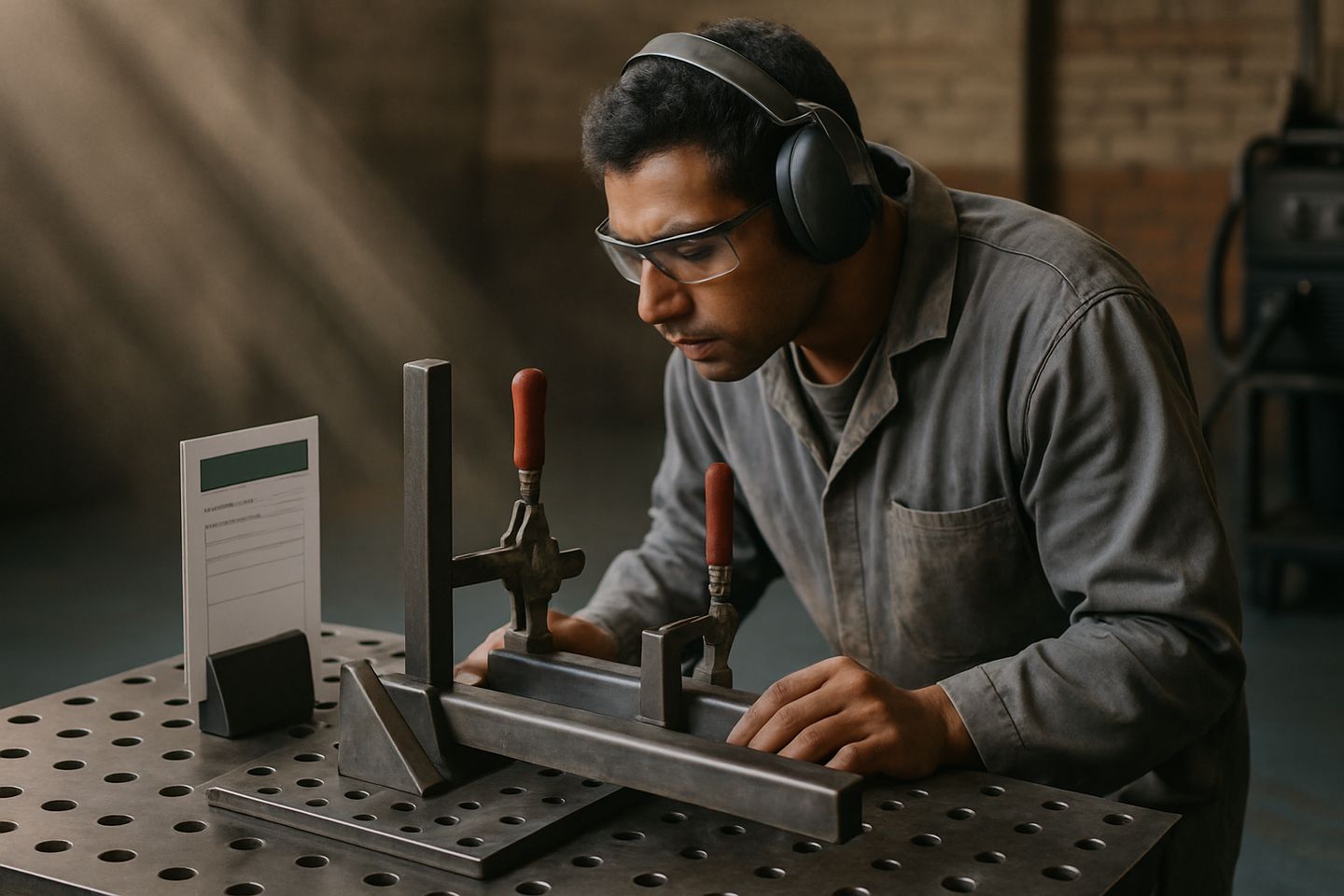
Every bay sets up a written or tagged jig recipe before touching a torch. Start by checking the job card for the drawing revision, then fetch the right JigKit Modular plates and angle blocks. Mark dog holes, fit the jig plates, and set square fences for main datums. Place the recipe tag where everyone can see it.
We line up clamps and earth bonds next. Always bolt earths directly to the BenchMaster Pro M10 studs or clamp close to the weld on clean metal. Pre-fit tags and mark material thickness or part number with a kanban card or recipe slip. Double-check the recipe tag matches the frame type and any batch instructions. Don't trust your eyes alone in a busy bay.
Before starting the weld, check rails and blocks for tightness and confirm all tags are in place. For batches, keep a ‘first-off’ sample clamped at the side as a running check.
- Read the drawing and job card first
- Set up jig plates and angle blocks to suit
- Clamp firmly and fit the earth bond
- Place recipe and thickness tags where visible
- Double-check all points before welding
Mistakes and how to spot them early
A common slip is mixing up angle blocks or missing a thickness tag, which can send a whole batch sideways. If you find jigs loose or clamps moved after tacking, check if someone skipped the handover or ignored the recipe tag. On trailers, a slipped dog insert or wrong angle pulls the whole frame out of alignment.
Another red flag is when parts don’t fit the ‘first-off’ or a new shift asks which way round the plates go. If you see extra grinding or forced fits late in the job, the jig recipe has broken down. Don’t let wheels or gate hinges be the quality control, catch it at the jig.
Bringing jig recipes into toolbox talks
We build jig recipes into every shift handover and toolbox talk. Show where recipe tags go, how to check angle blocks, and run through the steps until it’s second nature. If your team keeps losing alignment or rework is creeping in, run a quick bay check with the recipe as your checklist.
If you need help setting up recipe tags or want to see how the JigKit Modular plates fit your work, send us a message through our contact form. One of us can talk you through it or set up a demo in our Germiston training floor.