Shopfloor note
Soft jaws for painted tube
Soft jaws stop clamp marks on painted or powder-coated tube, which saves rework and keeps the shop moving. We fit them to our ClampRail jaws for quick changeover.
Why soft jaws matter on finished tube
When you clamp painted or powder-coated tube for welding or assembly, the standard serrated or steel jaws bite straight through the finish. A single slip or a bit of grit under the jaw, and that pipe needs a touch-up or a full repaint. In a busy job shop or a TVET bay, that can mean delays, scrap or arguing over who pays for rework.
Using soft jaws on ClampRail or standard G-clamps means the paint stays clean, especially on gates, balustrades, furniture frames or signage tube. For powder-coated work, the finish is even more vulnerable just after baking. The right jaws keep your fit-ups and adjustments safe and avoid waste in both custom jobs and small runs.
How we fit and use soft jaws in the shop
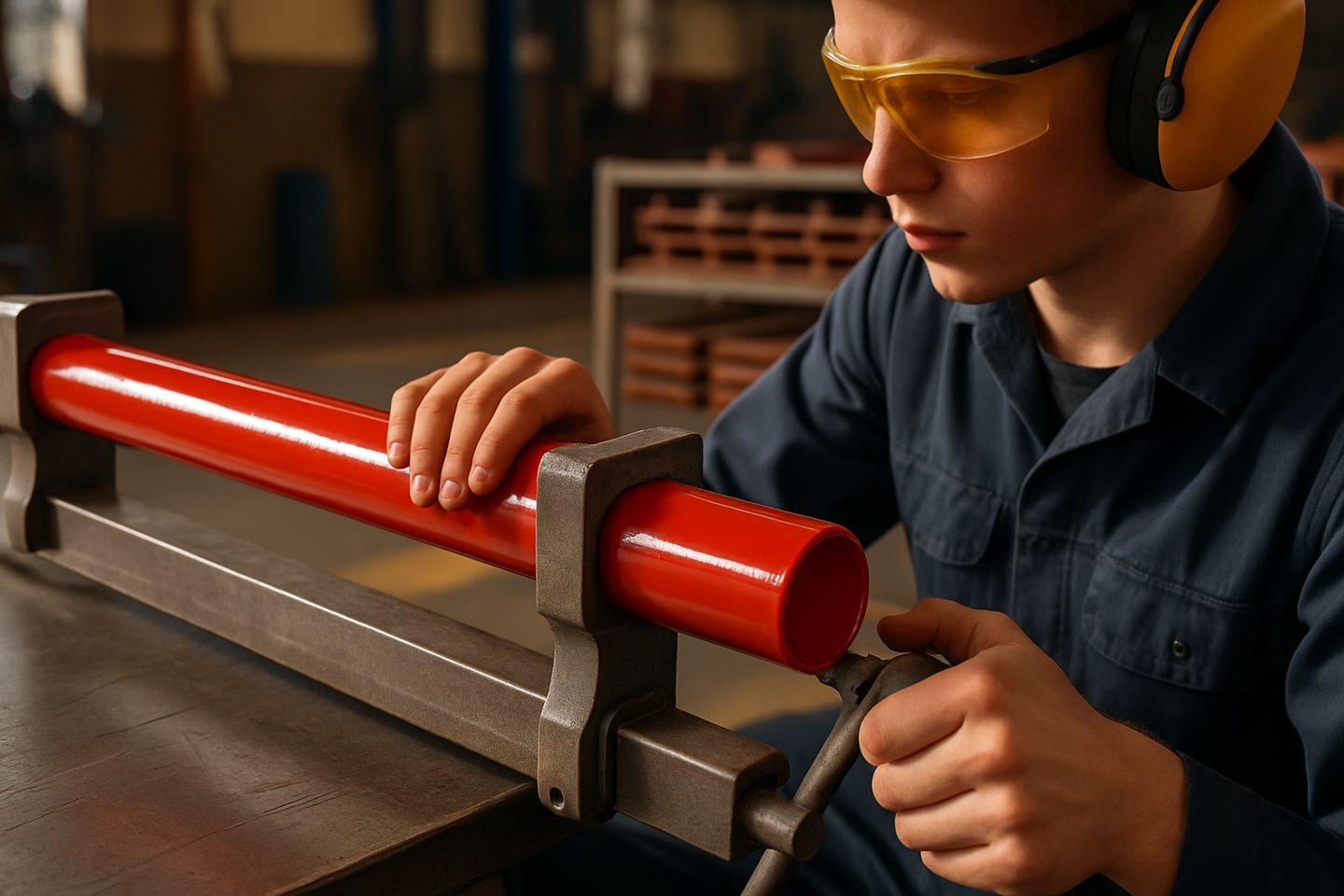
We keep packs of soft jaws in the fixture drawer and on the wall by the ClampRail bay. They’re cut from polyurethane sheet or thick rubber, with some shaped for our 18 mm dogs and others as slip-on covers for clamp faces. To fit, slide the soft jaw onto the clamp or the rail jaw, make sure it sits flat with no grit or swarf trapped underneath, then position the clamp as usual.
Tighten the clamp until the tube doesn’t move, but don't over-crush, clamp pressure should hold, not distort thin-walled aluminium or 1.6 mm steel. If you need more grip, use a wider jaw or double up the soft pad. After welding or tack-up, check for any heat transfer that might have softened the cover, and let it cool before storage.
- Keep soft jaws clean and dry
- Replace covers if they split or go hard
- Check jaw faces before every shift
- Use only on clean painted or coated tube
- Store soft jaws away from weld spatter
Mistakes we see and how to spot them early
The most common slip is clamping too tight or missing a chip under the soft jaw. That leaves an imprint, flat spot or even a cut in the paint, which only shows up after the job leaves the bay. Using a worn or split pad also risks scratching, especially after heavy welding when pads can go brittle.
Another easy mistake is rushing and forgetting to swap in soft jaws before clamping. If the paint is scuffed where the clamp sat, or you see little crescent marks, check your jaw covers and clean them out. Mark your clamps with coloured tape or a tag for ‘soft jaw only’ jobs to help the next shift.
How to bring this into a toolbox talk or get help
Soft jaw use is a five-minute habit worth building into every fit-up on painted or powder-coated work. Add it to your daily toolbox talk by showing a clean piece and a marked one, then let each team member fit a clamp and check for movement and marks.
If you’re running mixed bays or training new staff, keep a small bin of clean soft jaws near every fixture set. For any clamp rail or fixture jaw that needs a custom soft cover or if you want a full ClampRail System set-up for a new fab line, send us a message and we’ll help size and kit it out for your floor.