
Sandton
Sandton metal furniture
We recently fitted out a Sandton metal furniture workshop, setting up practical zones and fixtures to handle fast-paced retail orders with mixed-skill teams.
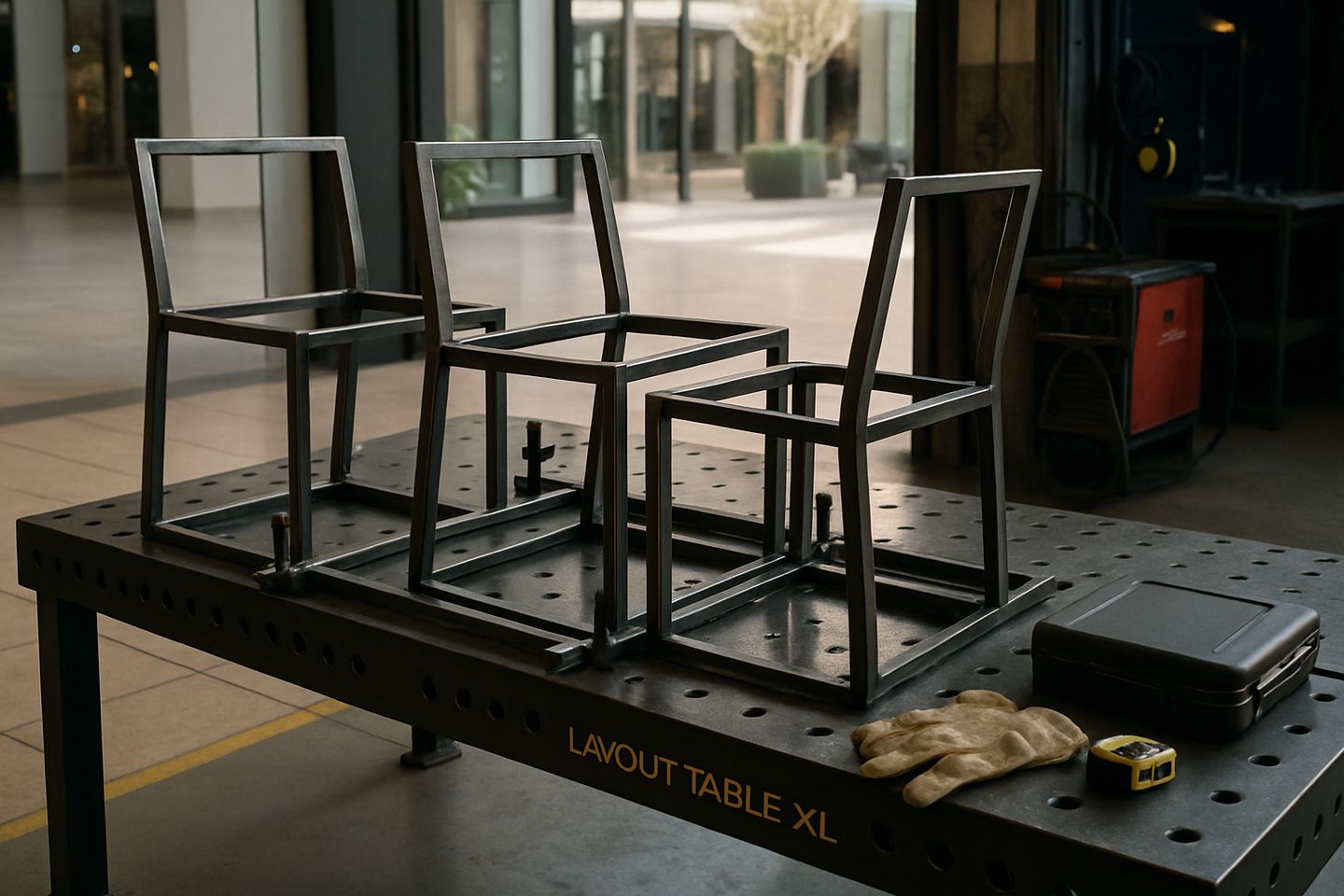
A Sandton yard with tight shifts and high standards
In Sandton, furniture makers often handle both retail contracts and high-end fit-outs, which means tight deadlines and strict quality demands. The yard we worked with sits in a busy commercial node, where workshop space is limited and storage gets shared with incoming frames and hardware.
Their team included seasoned boilermakers, new apprentices from a local TVET college, and a few contract welders during peak periods. Orders ranged from small café tables to large custom shelving, much of it powder-coated aluminium and steel. Before we arrived, they struggled to keep weld quality consistent, especially on visible joins. Measuring tools would go missing or get mixed up with cut-off stock, and layout marks sometimes got wiped off during cleaning.
Setting up practical gear and clear shopfloor zones
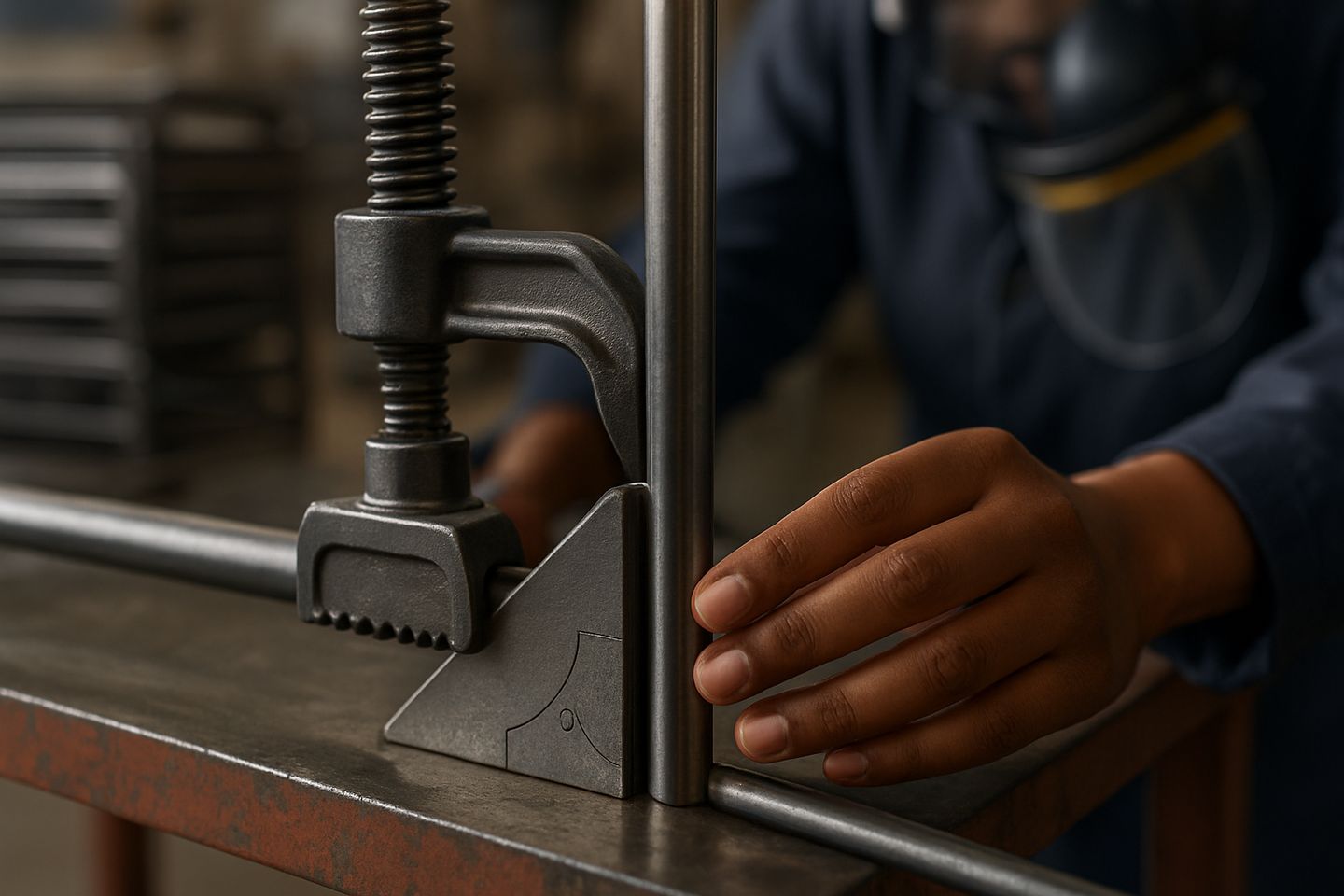
We started with a BenchMaster Pro as the main fab bench, paired with a full ClampRail System for flexible clamping of furniture frames. The team had been working off timber-topped tables, which don’t earth well and are a pain to keep square on longer rails. We set up a dedicated zone for grinding with the GrindDeck Safe, spark skirt and dust chute to keep airborne dust away from the measuring and assembly area.
For accuracy, we stocked their MeasureKit Fab set (callipers, squares, fillet weld gauges) in foam trays by the layout table. Each tool got a shift log card, so operators could record checks. A PPE Station Bay went up by the main door with clear visors, shade shields, gloves and ear protection, all under ISO-style safety signage as per the Occupational Health and Safety Act. The ScrapRack Lane kept offcuts sorted by thickness, making it easier to grab the right piece for bracing and small batch runs.
- BenchMaster Pro with M10 earth studs
- ClampRail System for frame jobs
- GrindDeck Safe with spark skirt
- MeasureKit Fab tools and log cards
- PPE Station Bay at entry point
First month problems and simple fixes
After two weeks, it was clear that tool hand-back needed more discipline. Callipers sometimes landed up on the wrong bay, and the foam trays went a bit grubby under heavy use. We swapped to brighter-colour tags and moved the log cards onto a wall board above the layout table, instead of leaving them loose in the foam.
Another issue cropped up with earth returns. A few welders still clipped the return to the bench frame or a trolley, causing erratic arc starts or heat marks on painted parts. We ran a shift toolbox talk using a BenchMaster Pro top to show how to bolt the return to the M10 stud or directly onto the workpiece, as SAIW's training and General Safety Regulation 9 expect. Since then, arc stability has been solid, and they haven't had any more heat faults on finished stock.
What other Sandton yards can learn from this fit-out
Sandton yards working with mixed teams and short deadlines can benefit from organising zones tightly and using earth points designed for fabrication, not repurposed surfaces. Simple shift log cards keep tools and checks in circulation, even when you’ve got more than one shift per day.
Bright tags and wall boards reduce the scramble for measuring tools, while a proper grind deck cuts down on airborne dust and spark risks in a small footprint. For anyone adding apprentices, a clear PPE point with visible signage and habit cards helps drive home safe practices. Don't overlook the value of practical toolbox talks early on, they solve most teething issues before they cost you a batch of frames.
Related on the floor
Primary gear: MeasureKit Fab. See also jobs and shopfloor.
What our Fabrication Gear customers say
Verified Google reviews
Talk to FabMaster Workshop
Tell us about your bay and we'll come back with a practical kit list, or book a visit to our Sunnyrock fab floor in Germiston.