Job path
Trailer fab
Trailer fabrication means building straight, square chassis and frames that last on South African roads, from farm yards to highways. It takes method, solid kit and clear habits.
What trailer fabrication work really involves
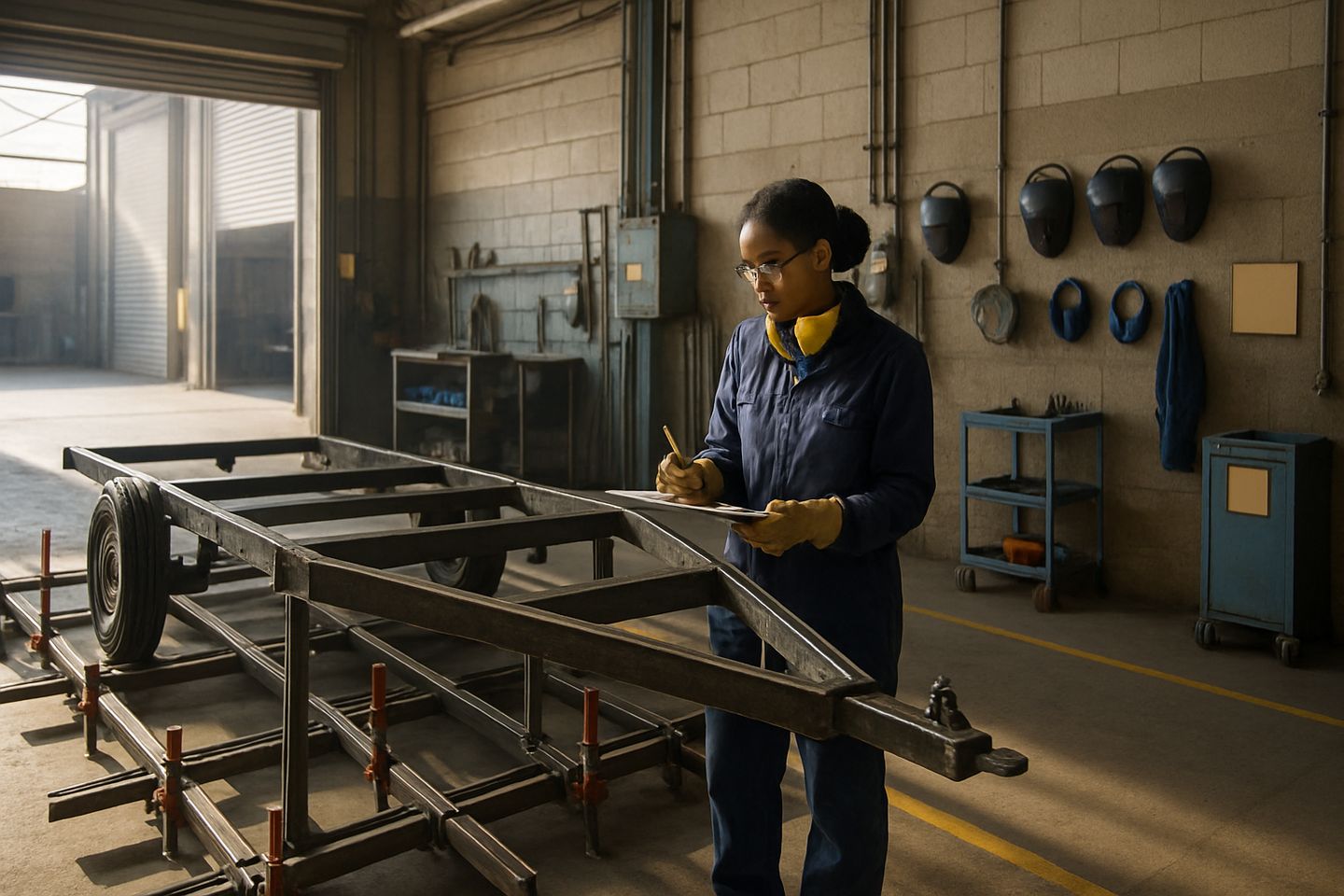
Trailer fab centres on building chassis, drawbars, axle mounts and flat deck frames, usually in mild steel profiles and plate from 2 to 10 mm. Tolerances matter: a cross-member that is out by 3 millimetres will pull the deck out of square, while a stray weld can foul a leaf spring or make the coupling hang skew.
Most jobs start with band-sawed or plasma-cut lengths, then marking out and drilling, followed by sub-assembly tacks and methodical welding. The work is physical, with a mix of welding, grinding, fitting and heavy lifts. Material moves in batches, often cut, drilled and prepped in sets before the welders start. Finished frames must stand square on all four corners, with axle brackets and drawbars centred to spec.
Which FabMaster gear and fixtures work best for trailer bays
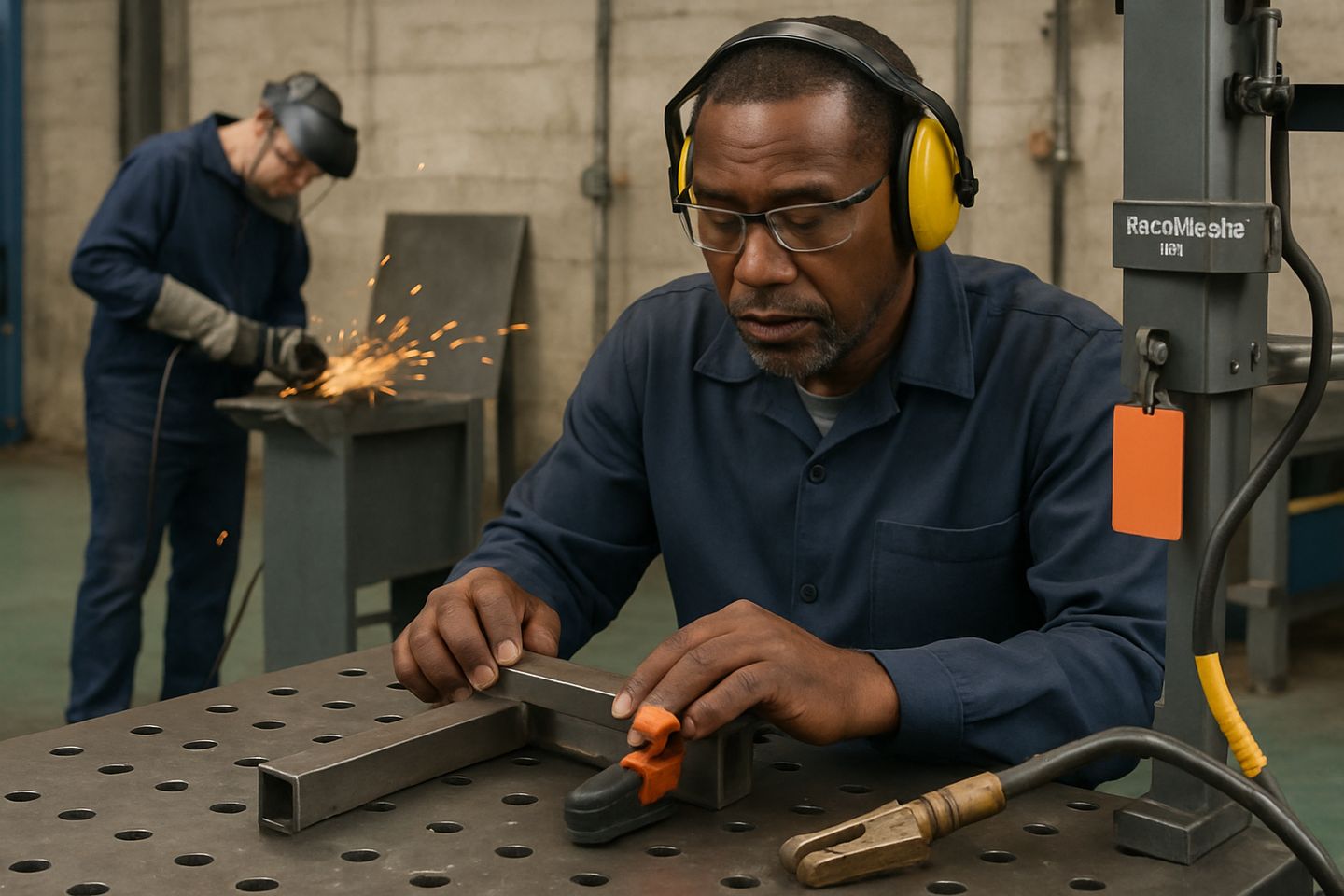
JigKit Modular slot plates set up quick, repeatable weld jigs for drawbars, chassis rails and deck frames. Angle blocks and recipe tags help repeat batch work and switch between models without costly downtime. BenchMaster Pro takes heavy parts up to 1200 kg and the 50 mm grid keeps everything square and locked down for accurate tacking.
MeasureKit Fab puts the basic inspection tools on hand, 300 mm squares, callipers, fillet weld gauges, so every join gets checked before the next part covers it up. The EarthBond Kit gives a safe, clean earth on each bay and avoids routing return current through hinges, chains or homemade benches, reducing hidden weld faults. Add ClampRail rails for extra-long chassis, and GrindDeck Safe for prepping cross-members and grinding flush without stray sparks.
- JigKit Modular with angle block set
- BenchMaster Pro bench with earth studs
- MeasureKit Fab inspection tools
- EarthBond Kit for safe returns
- GrindDeck Safe for spark control
How to keep trailer work straight in a South African yard
Batch jobs by size and subassembly. Prep and mark all parts before you weld, using recipe tags or printout cards for each model. On the coast, keep bare steel and clamp screws oiled and cover your benches at night. On the Highveld, blow dust out of dog holes and clamp threads weekly, especially in winter.
Weld records matter. Keep a log with weld sizes, key inspection notes and, for structural steelwork, who welded or checked each joint. Power cuts halt production and can create cold starts or missed checks, so plan queues and always check stops with a fillet gauge before boxing in. SANS 2001-CS1 applies for structural work; ISO 9606-1 is the norm for welder qualification in South Africa.
Common mistakes that drive rework in trailer bays
Rushing layout or skipping square checks is the main source of rework. Bent or twisted chassis can rarely be fixed without cutting, costing hours and scrap steel. Not clamping returns near the weld or using a bench frame for earth causes hidden arc marks or poor penetration, especially on heavy parts.
Ignoring clamp maintenance in humid shops rusts screws and makes grid jigs seize. Coastal yards must wipe down and oil jigs weekly. Inland, fine dust jams clamp threads and blocks earth studs. Always double-check welds for spatter, undercut or missed lengths before moving to the next step. Keep paperwork up to date and teach new hands to use the right measuring tools for every batch.
- Skipping square checks or layout
- Poor earth return practices
- Neglecting clamp or jig maintenance
- Incomplete weld inspection records
- Letting dust or rust creep into fixtures
Typical starting kit
Shopfloor note: Jig recipes before the weld