Job path
Structural steel
Structural steel work in South Africa means beams, plates and welded frames built for real yards, rather than only tidy plans. Accuracy and safe flow matter from first cut to final weld.
What structural steel jobs involve
Structural steel jobs cover a spread of tasks: cutting and prepping I-beams, channel, angle and plate, drilling or punching bolt holes, then welding frames and bracing. Most yards build shed columns, trusses, gantries or walkways that must fit on site with no fudge room. Materials are mainly S355 or S235 mild steel, 6 to 25 mm thick, sometimes with hot-dip galvanising to SANS 121 for coastal projects.
Accuracy really counts at tack-up and final fit. If a base plate is 4 mm out or a gusset is short, the whole frame can fight the site crew later. Weld sizes must meet drawings and SANS 2001-CS1, but it's the bolt centres, squareness and hole alignment that trip most jobs. Tidy marking out and trusted measuring tools are key right from layout.
FabMaster gear and fixtures for steelwork bays
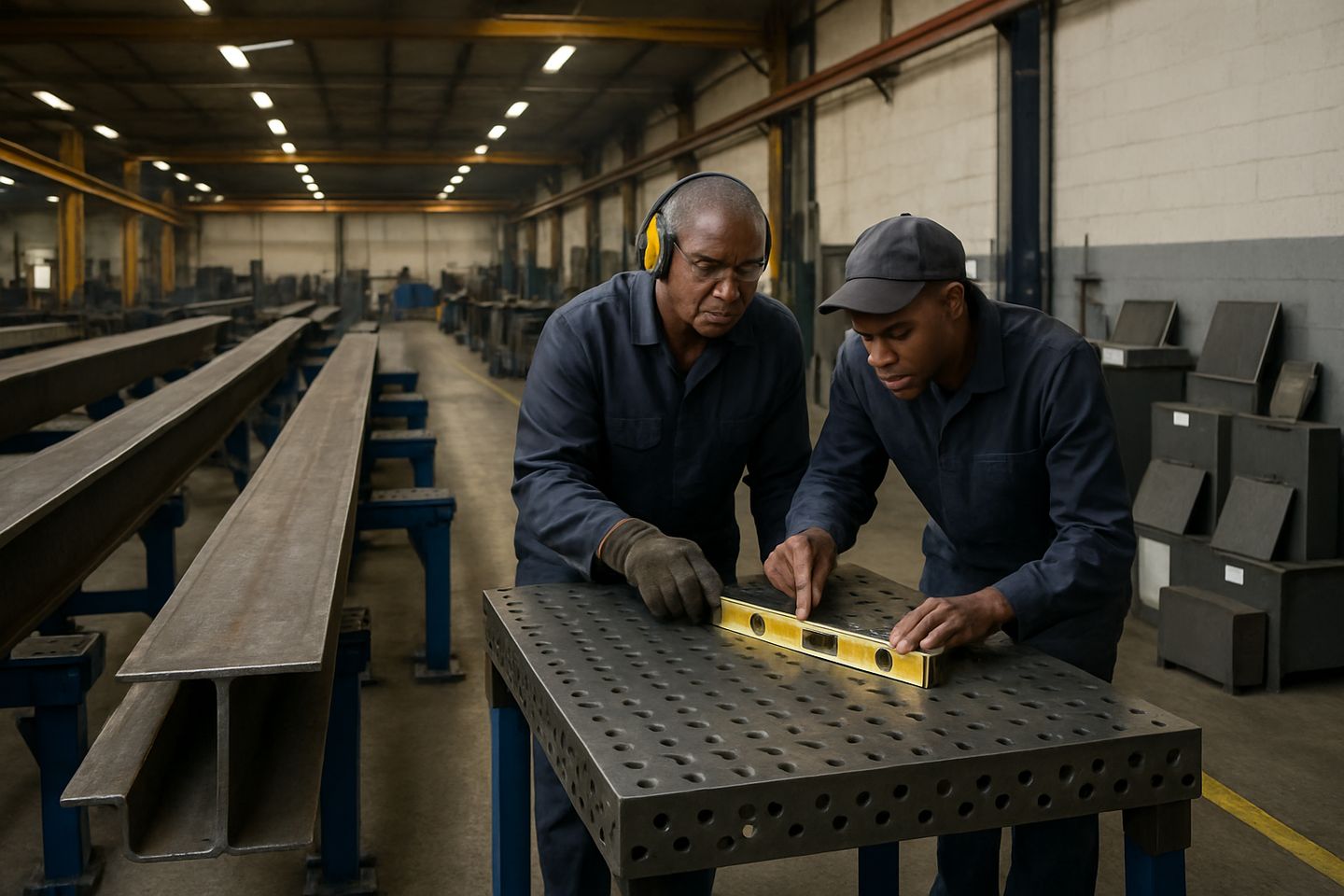
For steel frame assembly, the BenchMaster Pro is our go-to: a 2400 x 900 steel top that takes heavy beams, with the 50 mm dog-hole grid letting you clamp odd-shaped parts, angle blocks or fence rails right where you need them. The M10 earth studs mean you can bolt your welding return straight to the bench for a clean current path.
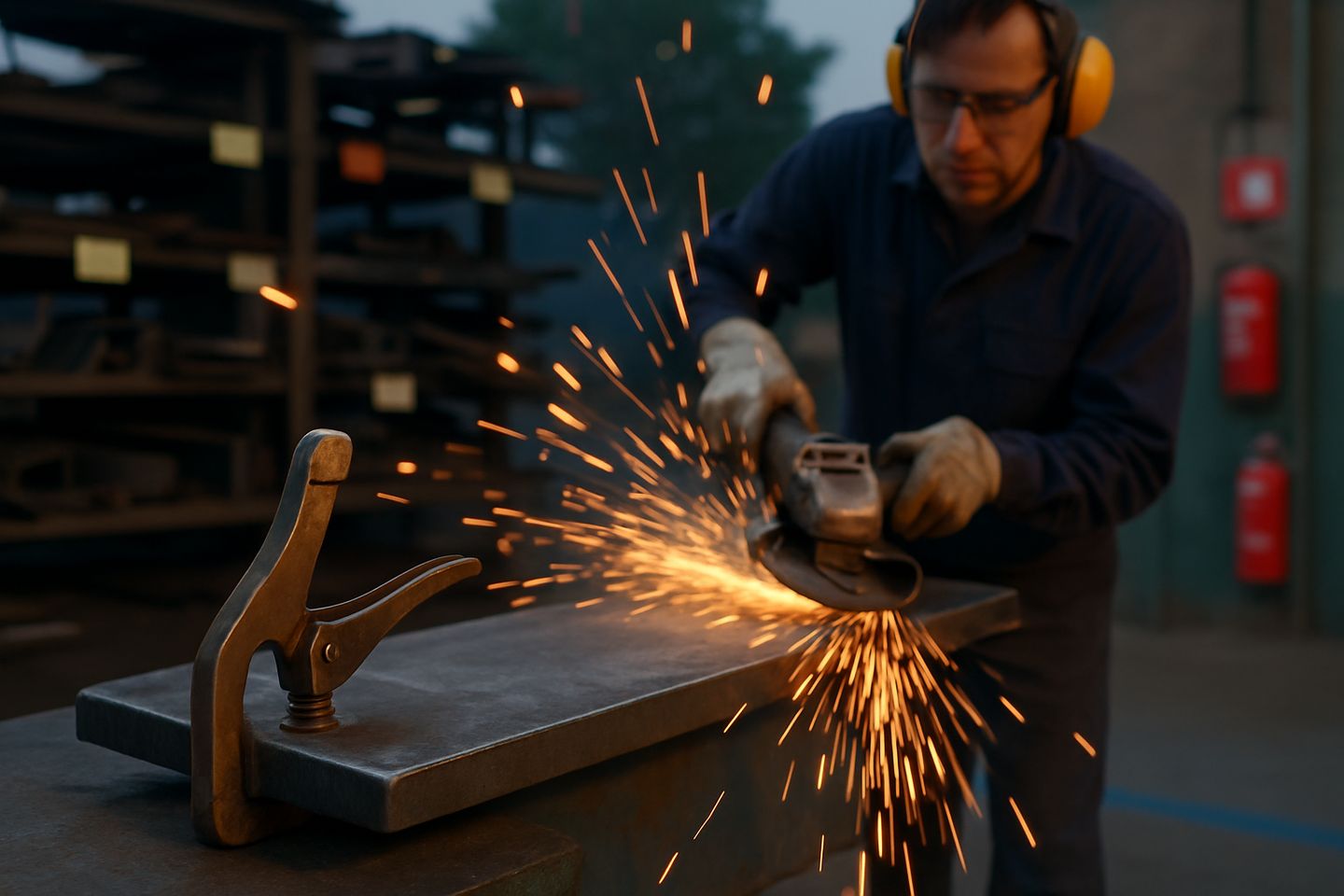
Add ClampRail System rails for longer I-beam or channel work, and use JigKit Modular plates and angle blocks to keep base plates square or repeat bracing parts. The MeasureKit Fab set covers callipers, weld gauges and squares for shift-to-shift accuracy. For grinding prep, GrindDeck Safe keeps the sparks and steel dust off your main bench. Don't forget to set PPE and earth bond kits at each bay so you don't break flow fetching safety gear.
- BenchMaster Pro fab bench for heavy fits
- ClampRail System for long part clamping
- JigKit Modular for repeat setups
- MeasureKit Fab to check fit and welds
- GrindDeck Safe for prep and clean-up
Running steel bays for South African conditions
Batching work makes life simpler: group cuts, drill runs or welds of the same job together to keep setups tight and save time. Highveld winters mean dry and dusty benches, so clean contact points often. On the coast, keep your clamp screws and earth leads oiled, or they rust and seize up fast. Summer storms can trip power, so time your critical welds and keep a safe restart plan for grinders and cutters.
Weld records matter: keep simple shift logs of who welded or tacked what, plus basic checks of weld size and position. For jobs with site sign-off, print or tag weld numbers at the bench using recipe tags from the JigKit set. Stick to the SAIW or ISO 9606-1 welder qualification where contracts call for it, and clip your latest inspection stickers to the bay rail or job card.
- Batch jobs for speed and tidy paperwork
- Oil clamps and leads in Durban or Cape Town
- Log welds and checks per shift
- Tag welds for contract jobs
Mistakes that mean rework and lost time
Missing squareness or bolt hole spacing causes the worst headaches. A jig that slips or a fence that moves mid-tack can mean cutting the job apart and starting again. Always check squareness before full welding. Mixing up part tags or getting weld sizes wrong leads to failed inspections and site delays.
Poor earthing is another costly slip, especially if you clamp to a painted or rusty spot. Clamp as close as possible to clean steel near the weld, not on the bench frame or another bay. Leaving out a fire watch during grinding or cutting puts the whole yard at risk, especially if sparks fly near offcut bins or stacked parts.
Typical starting kit
Shopfloor note: Dog-hole discipline on fab benches