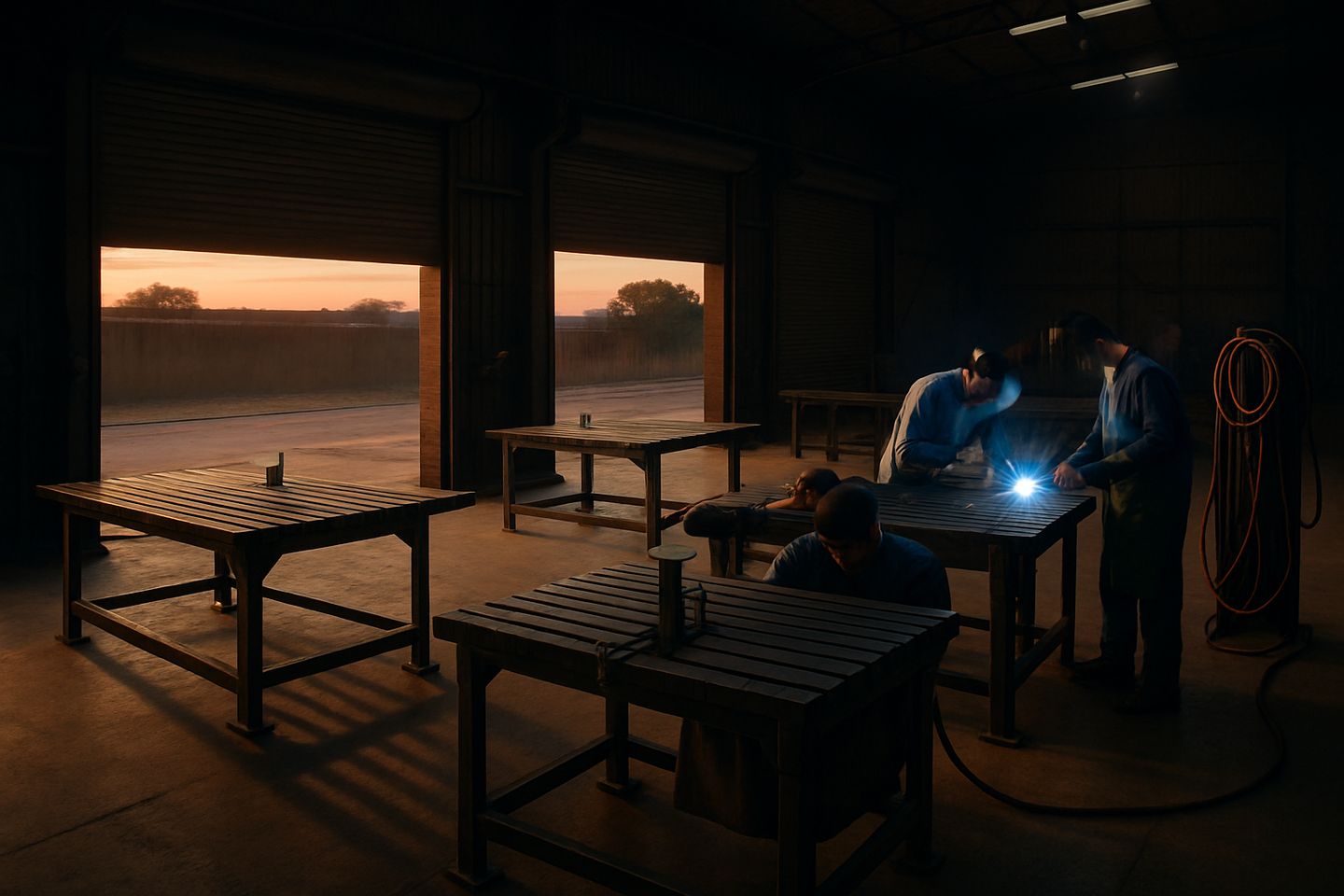
Job path
Catering equipment
Catering equipment fabrication calls for clean stainless welds, accurate frames and solid batch control. Our bay setups and gear help you build consistent kitchen and canteen units.
What catering equipment fabrication involves
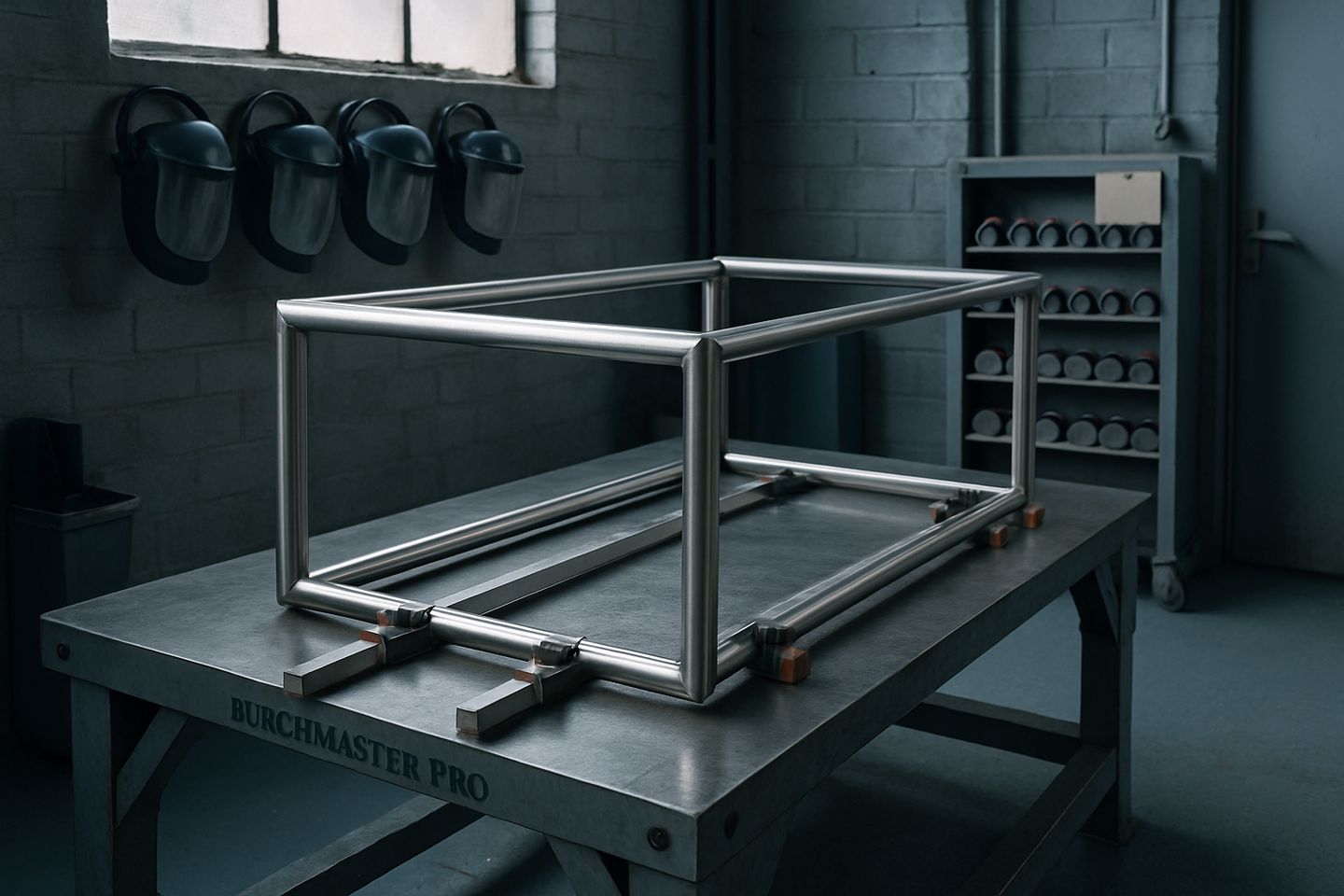
Building catering equipment means working mainly with 304 or 316 stainless sheet, angle and tube. Common jobs include service counters, wall shelving, prep tables, gantries and custom kitchen frames. These parts need accurate squareness, tidy welds and a finish that stands up to constant cleaning.
Fit, weld and grind tolerances are tight to avoid gaps, warping or sharp edges. Stainless distorts easily, so holding jigs and clamps matter as much as cutting accuracy. Most service counters need level tops, flat shelves and neatly welded seams, since every joint shows in a finished kitchen.
FabMaster gear that suits stainless work
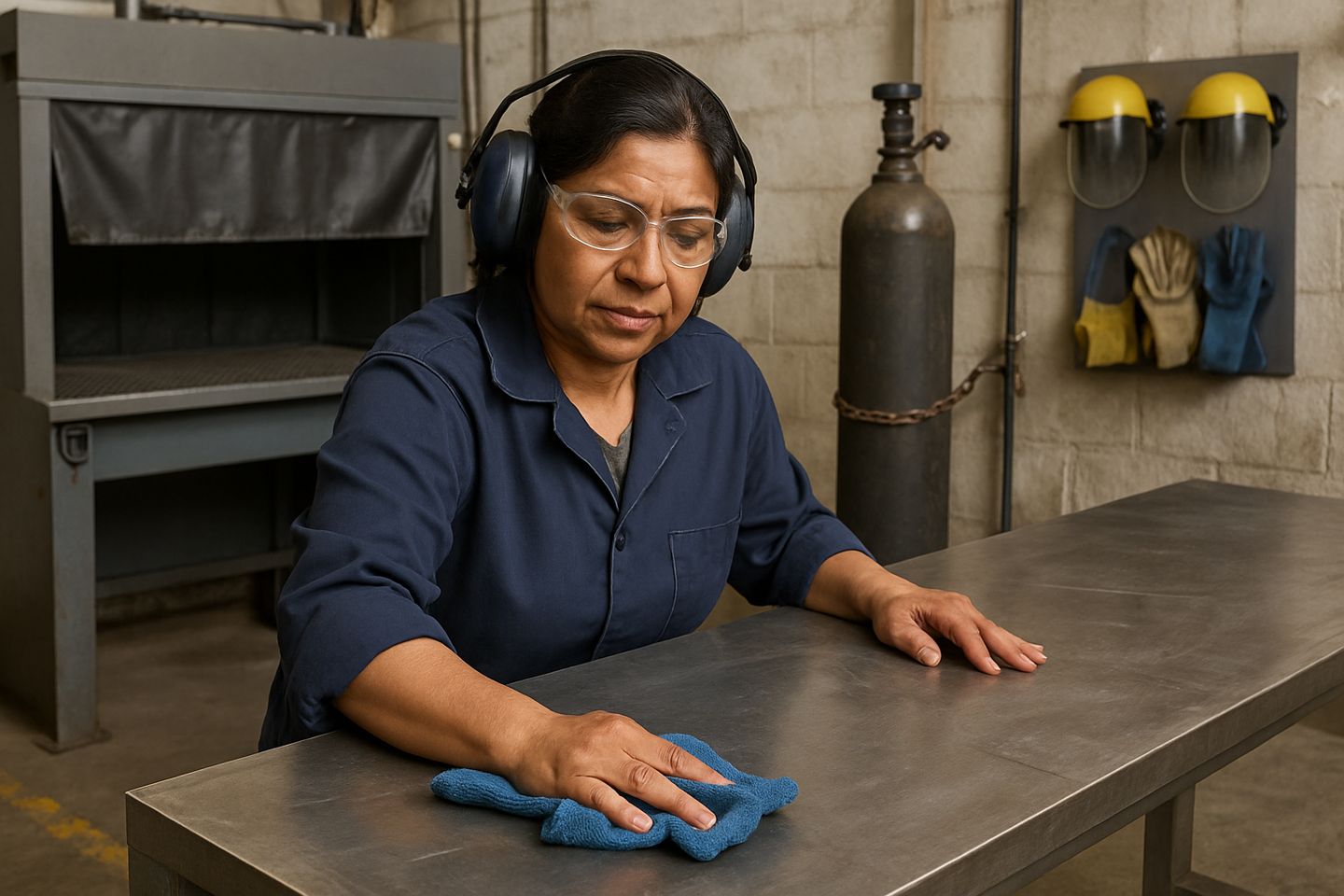
BenchMaster Pro gives a flat setup for frames and shelf work, with a steel top that handles stainless splatter and cleaning. Dog-hole grids and the earth studs keep parts clamped and bonded for TIG work, which is common on visible seams.
ClampRail System holds tight without marring stainless faces, especially with soft jaw packs. For repeated batches, the JigKit Modular plates let you block out angles and shelf heights fast, keeping runs consistent. MeasureKit Fab is essential for checking squareness, mitres and fillet weld sizes so you stay within spec.
Consumable Cart keeps discs, pads and weld wire sorted, so you do not lose time chasing stock mid-batch. EarthBond Kit makes sure your return cables are bonded to clean metal, which is critical for TIG on stainless to prevent arc wandering and poor starts.
- BenchMaster Pro for flat, safe setup
- ClampRail System with soft jaws
- JigKit Modular for repeat batches
- MeasureKit Fab for quick checks
- Consumable Cart for batch stock
How to run catering bays well in South Africa
Batching is the only way to keep kitchen and canteen frame jobs efficient. Mark bays for batch staging and log every batch with weld records, as many kitchen buyers want proof of weld quality and traceability. For welders, ISO 9606-1 is the usual ticket for TIG and MIG on stainless. Add weld log cards to each batch so rework and pass rates are clear.
On the coast, keep an eye on rust spots if you store any mild steel in the same space. Humidity in Durban, Gqeberha and Cape Town attacks clamp screws and earth leads, so oil and inspect regularly. Up on the Highveld, dust clogs moving parts on jigs and can scratch polished faces. Always sweep down benches and check measuring gear before final fit-up.
If you lose power unexpectedly, stop welding immediately and check all welds for starts and stops on the batch sheet before picking up. Never rush a restart, as a cold joint or missed seam in a food zone means a full strip-down.
Mistakes that lead to the most rework
Grinding stainless too hot or with contaminated discs leaves burn marks and black lines, which customers reject. Always keep a separate disc set for stainless and check the RPM rating before you start grinding. Measure with clean callipers and squares, as dirt throws out fit-up by millimetres over long runs.
Loose earthing causes arc wander, especially on TIG. Use the earth studs on BenchMaster Pro or clamp close to the weld on clean, bright metal. Never route earth return through chain slings, hinges or the bench frame of another bay.
Mistakes with batch paperwork, or skipping weld log entries, cause confusion, and mean you redo work to satisfy audit or handover. Set up kanban cards for restock and always tag batches by job number, rather than only location.
Typical starting kit
Shopfloor note: Kanban discs that restock