Job path
Agricultural implements
Farm and agri yards keep implements moving with repairs and fresh builds, from hitches to blade plates. Good prep and solid welding keep downtime short all season.
What agri implement work involves
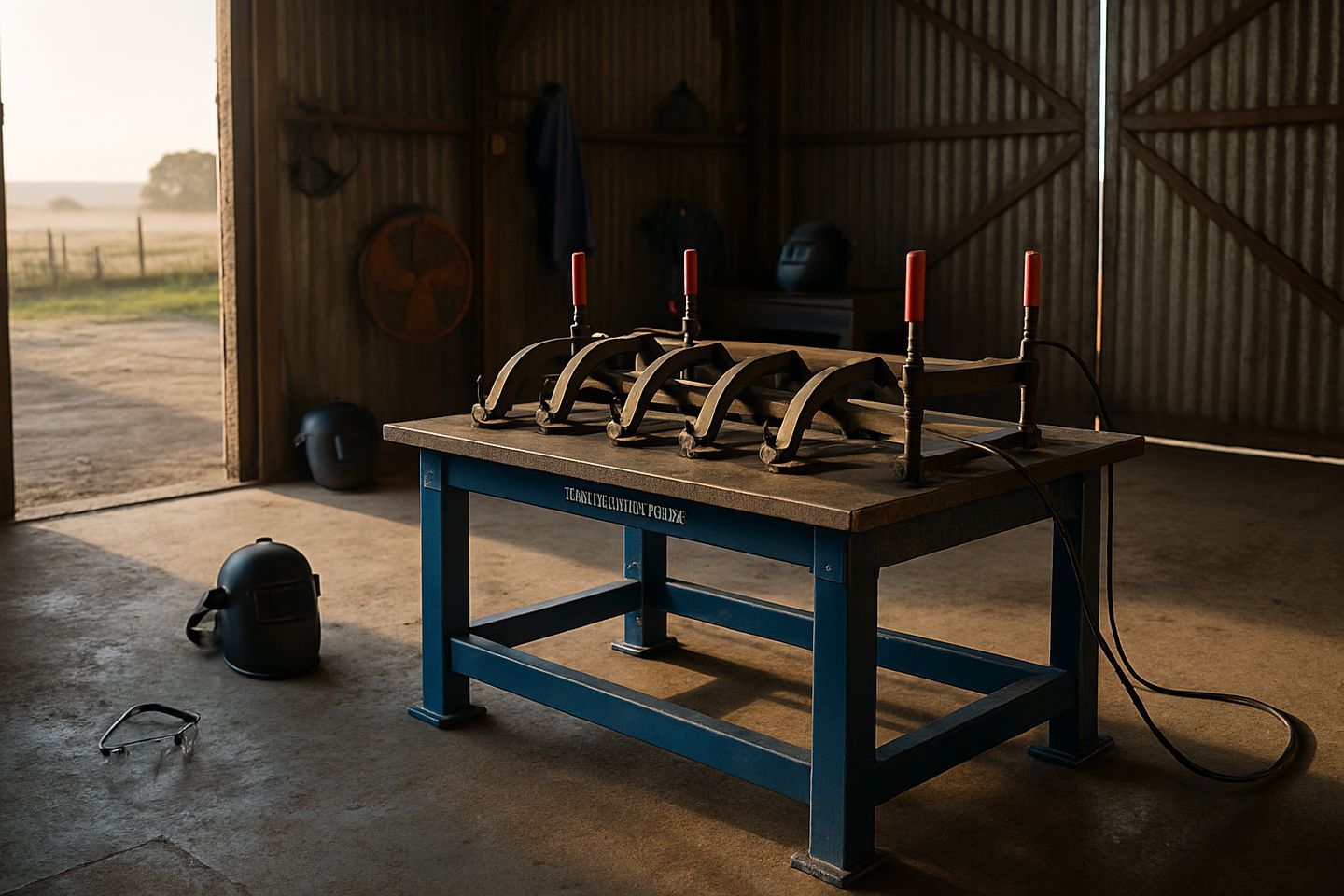
Building or repairing agricultural implements covers anything from trailer hitches, grader blades, drawbars, tines, and seed box frames to loader buckets and toolbars. Most parts run in mild steel, with some upgrades in high-tensile or abrasion-resistant plate for wear edges and shanks. You’ll see a lot of 6 to 20 mm plate, channel, pipe, and angle iron. Accuracy means clean fits at hinge pins, true square on mounting plates, and slot spacing that matches standard tractor couplers. A sloppy hole or misaligned lug adds hours of rework or lets a pin wear out after the first field run.
Often, you’re patching a broken beam in the bakkie shed one day and fitting a new implement frame the next. The real trick is keeping fixtures simple but sturdy enough to repeat the same setup, so your row of hitch points lines up and drawbar holes don’t drift. On older kit, expect a lot of torch cutting, cleaning welds, and fighting rust or paint.
FabMaster gear that suits farm work
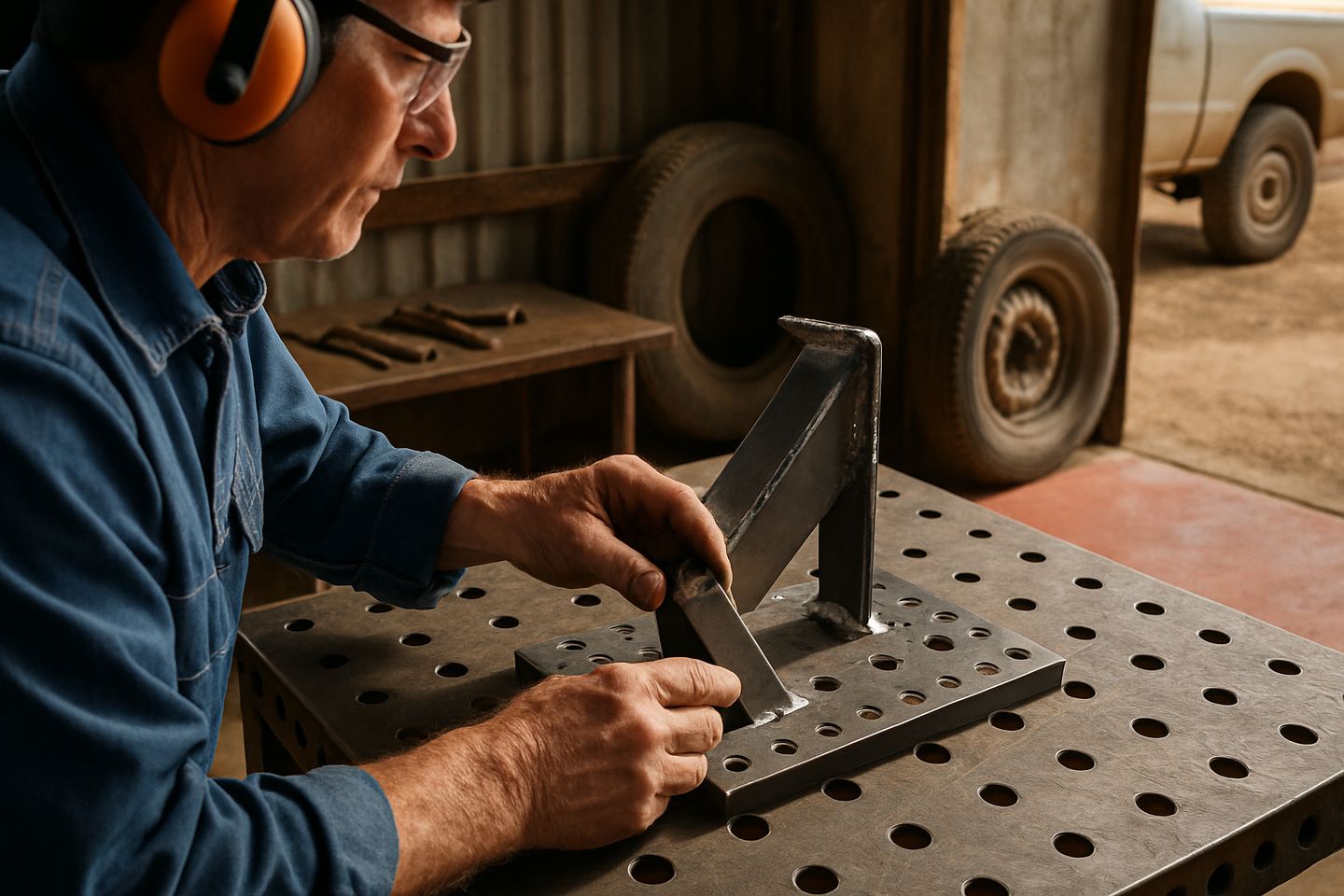
BenchMaster Pro is made for these jobs. The 50 mm hole grid makes clamping up odd frames, standards and plates quick, so you don’t waste time balancing parts on scrap offcuts. M10 earth studs let you bolt down earth return cleanly for safe, spatter-free welding. The ClampRail System handles those long crossbars and gates, even when you need to sandwich three plates for batch drilling or welding.
TorchBay Station is the call for oxy-fuel or plasma prep. The tip rack and hose reels keep you moving between cuts and tacks, with PPE hanging at hand. MeasureKit Fab covers your calliper, square, and weld gauge needs, use it to check pin bores, bracket faces, and fillet leg length. For batch jobs, JigKit Modular lets you tag setups so any operator can repeat a field repair or build without guessing the steps.
- BenchMaster Pro for heavy clamping and earth return
- ClampRail System for long or odd shapes
- TorchBay Station for safe hot work prep
- MeasureKit Fab for checks and quick setups
How to run it well in a South African yard
Farm and college yards work in all seasons, so plan for Highveld dust, Durban moisture, and summer storms tripping the mains. Always keep earth return cable, clamp screws, and PPE dry and clean. On the coast, wipe down bare steel and keep clamps oiled to stop rust. If power cuts in, secure grinders and torches, then check setups before restart, its easy to leave a clamp loose when you’re rushing.
Agri repairs are often fast turn jobs, so batch parts where you can and tag jigs for repeat fits. Keep weld records for any critical hitch or drawbar repair, it makes inspection or insurance checks much easier later. If you build for a contract, ask early whether the client wants welders qualified to ISO 9606-1. Mark all hot work bays and keep screens up if anyone else is using the space.
- Log welds and batch sizes for big jobs
- Tag jigs for repeat repairs
- Wipe down clamps after coastal work
- Check PPE and screens before starting
Mistakes that cost the most rework
Misaligned holes or crooked mounting faces mean pins shear or parts fail before their time. Rushing torch cuts and skipping grind prep leaves welds full of slag and undercut, costing time to gouge out and redo. The most common slip is clamping earth return to a painted or rusty patch, this gives you a weak arc and cold lap. Don’t route return through the bench frame or use a clamp on bearings, as you can cook the grease or damage moving parts.
A lot of rework pops up when someone skips measuring bracket holes or forgets to double-check fit before welding. Never skip checking disc and tool ratings. And always fit flashback arrestors on both ends when working with oxy-acetylene as good gas practice demands.
- Measure and check before welding parts
- Clamp earth return to clean bright metal
- Fit flashback arrestors and check hoses
- Never torch cut on closed or dirty tanks
Typical starting kit
Shopfloor note: Flashback habits that stick