Shopfloor note
Flashback habits that stick
Flashback arrestor checks and kit habits need to fit real shop routines, rather than only training slides. Here’s how we lock in flashback safety that actually sticks.
Why flashback safety slips through the cracks
Every shop has a tip board or a sign about flashback arrestors, but on a busy day most crews just grab hoses and get cutting. The checks get skipped or squeezed into a rush, especially if the kit’s scattered or a shared bay isn’t tidy. I see this most with juniors or when bays are swapped mid-job. It’s not that people don’t care, it’s that safe habits get buried under shortcuts. One missed flashback arrestor check can mean a melted hose or a near-miss with a gas flash.
We’ve seen too many shops where the only reminder is a faded poster from head office. Flashbacks don’t care about slogans, only about what actually happens at the torch end. The right habits have to be put straight onto the floor, rather than only the whiteboard.
How to build flashback checks into daily routines
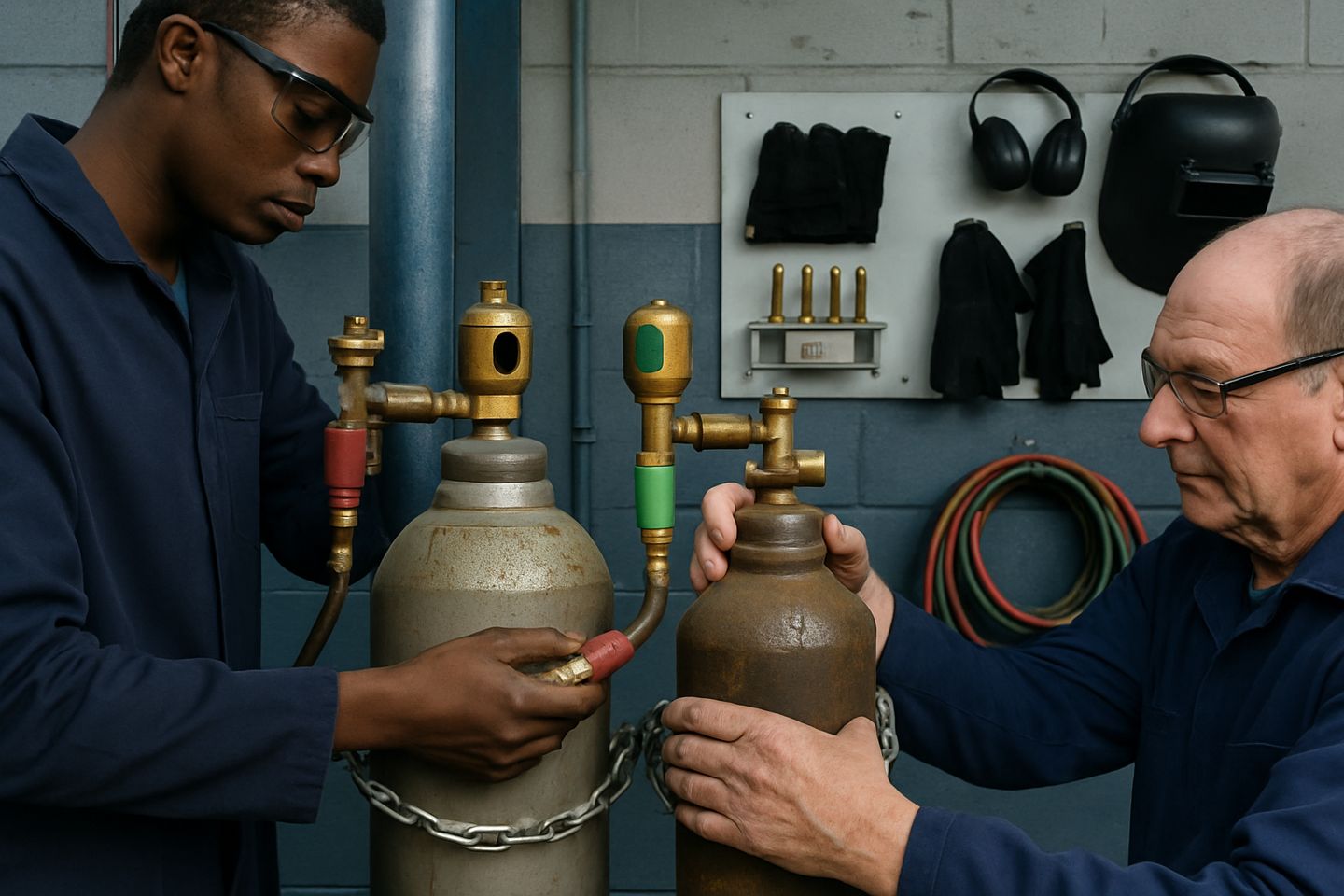
We lock in flashback habits by tying them to kit layout, bay flow, and hands-on cards. First, put the tip board, flashback arrestor kit, and PPE hooks in the same marked spot at every bay, no hunting. Next, use a simple, visible flashback check card on a tag or hook at the point of use. Our TorchBay Station comes with these cards, but even a laminated note does the job if it’s right at the torch.
Run a start-of-shift check: arrestors fitted (both regulator and torch end on longer hoses, as per SANS 10019), hoses not cracked or burnt, tips clean, cylinders chained and capped, and gas turned off when not in use. Mark a coloured path from cylinder store to bay so staff don’t shortcut with loose bottles. We keep a habit card on the arrestor for tick-off, rather than only memory.
- Stage tip board, arrestors and PPE at the same spot every shift
- Flashback check card or tag at the torch end
- Start-of-shift and changeover tick-off
- Follow a marked cylinder path, never bakkie-drop
- Use a coloured tag for arrestors due for replacement
Common slip-ups and how to spot them early
The first slip is a missing arrestor at the torch, usually after a hose swap or quick job reset. Don’t just look for the brass, check the fit and make on both ends, wrong type, wrong side, or bent threads are all too common. Next, hoses can look fine but have a nick or burn near the connector; squeeze and bend lightly to check, rather than only a quick glance. Crews sometimes run torches without caps on cylinders after topping up, or leave oxygen and fuel bottles side by side instead of separated or screened off.
One I see in winter is crews forget to check for dust or grease on oxygen fittings, its easy to just tighten and turn on. Listen for any pop or hiss, and if something’s off, stop right there. Any burn, smell, or melted line is a stop-job event. SANS 10019 backs up these habits, but it’s the floor routine that stops accidents before they start.
Making flashback habits a toolbox talk staple
Bring flashback checks into toolbox talks monthly or when a bay layout changes. Use a real kit walk-through, arrestors in hand, card in view, and a bottle on the move. Let a junior run the card step by step, rather than only the foreman. Show the difference between a clean fit and a bodged thread, or a cracked hose versus a good one.
If you’re unsure about your arrestors, kit paths or bay setup, send us a message on our contact form. We’ll help map out card routes, tag packs or suggest a TorchBay Station fit for your space. Real habits beat posters, get them right once and they stick for good.