
Shopfloor note
Scaffold tube marks
Scaffold tube marks keep fabrication on track when bays are busy and batches repeat. Here’s how we lay out scaffold tubes for clean, checkable weld-ups.
Why scaffold tube marks matter in busy yards
Scaffold tube can be a headache when you’re running multiple welders and fitters on one floor. Tubes roll, marks rub off, and if you start rushing layouts you end up with crossed welds or missed joints. When the bay’s full and another crew comes in after your shift, a clear mark is the difference between quick progress and a mess that needs grinding back.
We see most mistakes happen when teams skip marking or rely on memory. With power cuts or cable faults, someone always loses their place. Scaffold tube marks make sure the layout stays clear, even if the next person is not the one who started the job.
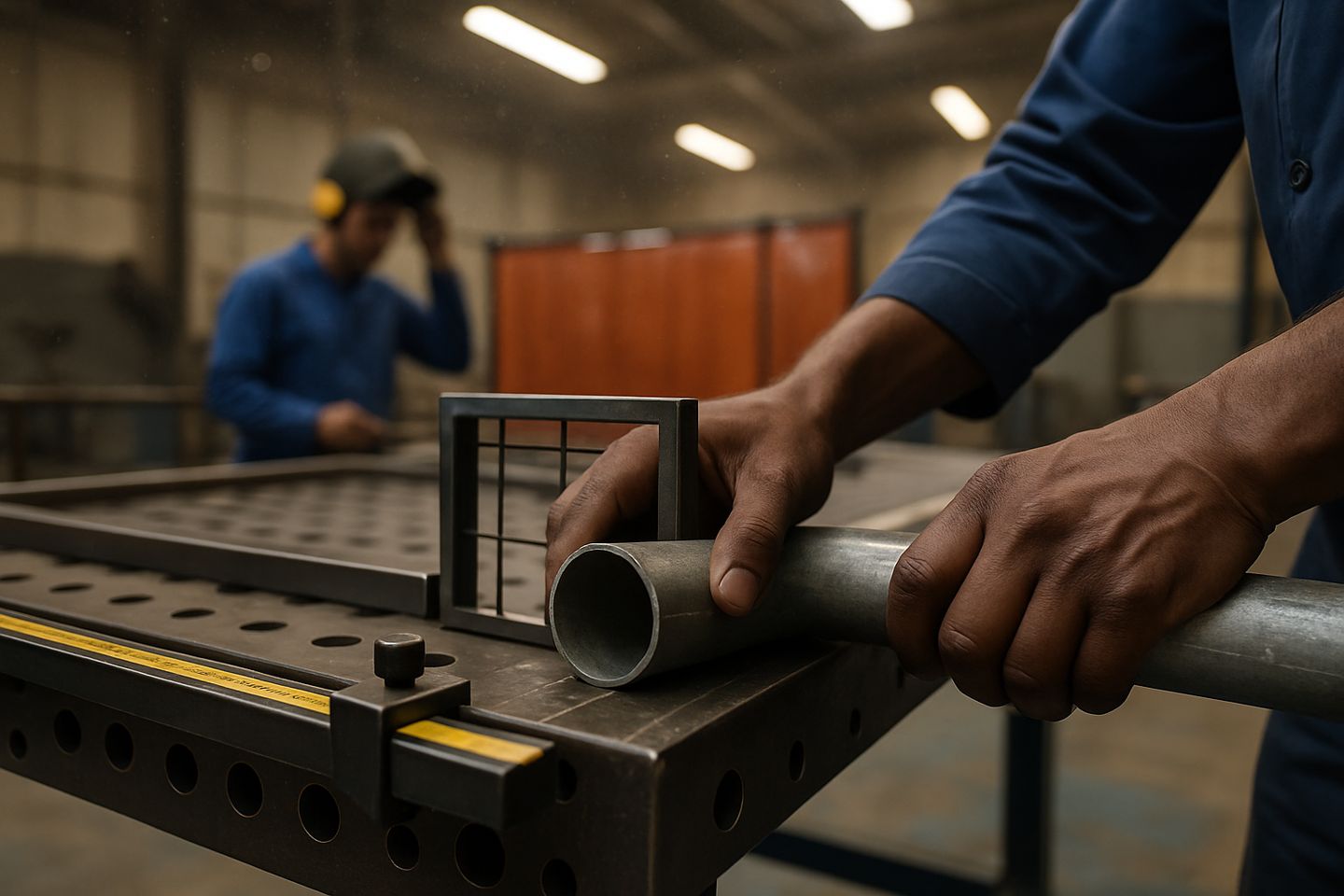
Step by step method for scaffold tube layout
First, make sure scaffold tubes are clean. Wipe off grease and dust so your marker or scribe stands out. Set up your layout rails or use a square fence on the bench. For repetitive jobs, snap a chalk line or use our printable shopfloor bay cards as the reference.
Measure using a proper steel rule or the 300 mm square from the MeasureKit Fab. Mark the cut or weld points at the right angles, checking with a fillet weld gauge if needed. For site or bay builds, tag each tube with its job and orientation using a recipe tag or tape. Always mark the earth return point clearly if you’re welding later.
On multi-bay floors, colour-code your marks by shift or crew so there’s no confusion. When the job’s ready to move, transfer marks with a layout punch or a wrap-around tape measure if you need a full circumference.
- Clean tubes before marking
- Use steel rules and squares for accuracy
- Colour-code for shifts or crews
- Tag orientation and job number
- Mark earth return points
Common mistakes and how to avoid them
The most common slip is marking with a felt tip that wipes off once you start handling the tube. Rather use a scribe or chalk for light steel, or a paint marker for rough surfaces. Don’t forget to double-check all measurements: scaffold tube is easy to cut a few millimetres short if your tape slips.
It’s easy to mix up tubes if tags are missing or marks overlap. Watch out for duplicate colour codes or job numbers. If your bay crew rotates, a missing mark can mean someone sets up to weld in the wrong spot. I’ve also seen tubes stacked with the wrong face up, so the marks are hidden. Quick tip: always stack marked sides facing out.
Toolbox talk tips and when to get advice
Bring scaffold tube marking habits into your weekly toolbox talk. Show the team the marking tools, compare permanent and wipe-off marks, and walk the bay to spot faded or lost layout points. Remind everyone to record the shift handover on the shopfloor card or log.
If you’re facing recurring mix-ups, or a batch job keeps needing rework, send us a message through our contact form. We can help match layout tables, marking tools and bay cards to your floor, or run a quick method demo for your crew at the next visit.