
Shopfloor note
PPE at the bay gate
Bay gate PPE stations are the start and end of safe shifts. Good habits here keep risky shortcuts out of your yard, even when the pressure is on.
Why a PPE bay gate station stops trouble before it starts
When I walk the floor, the busiest spot is never the actual weld bay. It's always the entry point where teams grab gloves, fit their visors, or swap out earplugs on the fly. This is where safe habits either stick or slip. If the station is empty, messy, or in the wrong place, someone walks straight into the bay with the wrong kit, maybe skipping gloves or choosing the wrong shade visor when a plasma job is booked. Accidents and near-misses kick off from these small gaps.
The real risk is more than injury, but lost time and broken routines. In a yard where teams rotate or apprentices jump between bays, a worn-out PPE gate station leads to confusion and shortcuts. You end up with mismatched gloves, lost log cards, or a visor rack that's always empty by Tuesday. Sorting this out at the gate means you spend less time chasing kit mid-shift and more time getting jobs done safely.
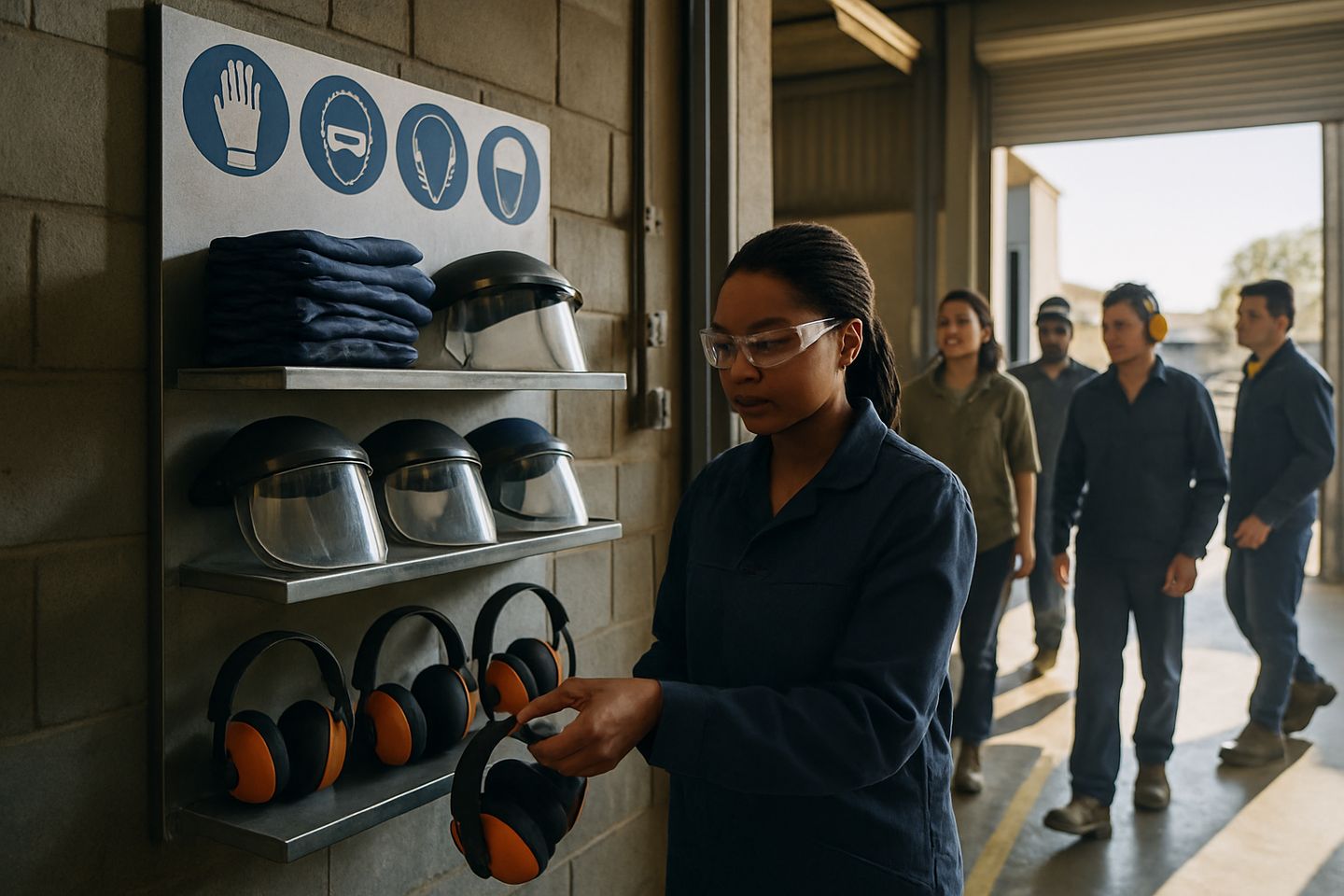
Step by step: setting up your bay gate PPE station
First, site the PPE station where every person must pass to enter the fab zone, no side doors or 'I'll grab it later' routes. Use clear ISO-style safety signs and habit cards at eye level. Stock the rack with enough gear for your biggest shift: gloves in all sizes, both clear and shade visors, disposable plugs and muffs. Place a foam case with spares and a log card for shift checks.
Mount the rack or stand so nothing blocks the walkway but it's close enough to stop anyone breezing past. Hang visors so the next person can see if its clean and not cracked. Tag gloves by size with thick, simple numbers. Keep the consumables topped up and bin or tag damaged kit as out-of-service right there, don't leave it for the next shift to discover.
Every Monday, run a quick visual check for empty slots or broken gear. If you use a kanban or log card system, check that it actually gets filled in, rather than only ticked off when someone remembers.
- Put the station at the main entry, not in a corner
- Stock all common glove and visor sizes
- Hang PPE visibly, not stashed in a drawer
- Tag damaged kit on the spot
- Check log cards or kanban signals are used
Common mistakes and how to spot them quickly
The most common slip is letting PPE run out because no one owns the refill job. A half-empty glove rack or missing earplugs means someone walks into the fab area under-protected. Another mistake is letting the station get buried under old kit, offcuts, or paperwork. If you find a pile of left-handed gloves or a cracked visor shoved at the back, the last audit was too long ago.
Watch out for PPE racks that drift away from the entry point, maybe to make space for a consumable cart or a new fixture. The closer the gear is to the door, the fewer excuses for missing kit. Its easy to miss damaged tags or habit cards that fade in the sun, update these at the start of each term or project. Safety signs that peel or go missing need a fix before someone claims they 'didn't know'.
Bringing PPE habits into toolbox talks and when to contact us
Use the first toolbox talk of the week to check everyone knows where the PPE station is and how to spot if gear is missing or faulty. Get each person to find their size gloves and check a visor for cracks or grime. Run a five-minute check on the log card or kanban board, if you spot gaps, fix them before the first torch gets struck.
If your bay gate routine keeps breaking down or new gear never gets put out on time, send us a message through our contact form. We can help with more than racks, we look at layout, training routines, and supply to keep your floor covered from first shift to year-end.