
Clamp torque card
A clamp torque card keeps your crew’s key clamp settings, habits and safety checks visible at every fab bench. Request our latest printable card via our contact form.
What a clamp torque card is and who uses it
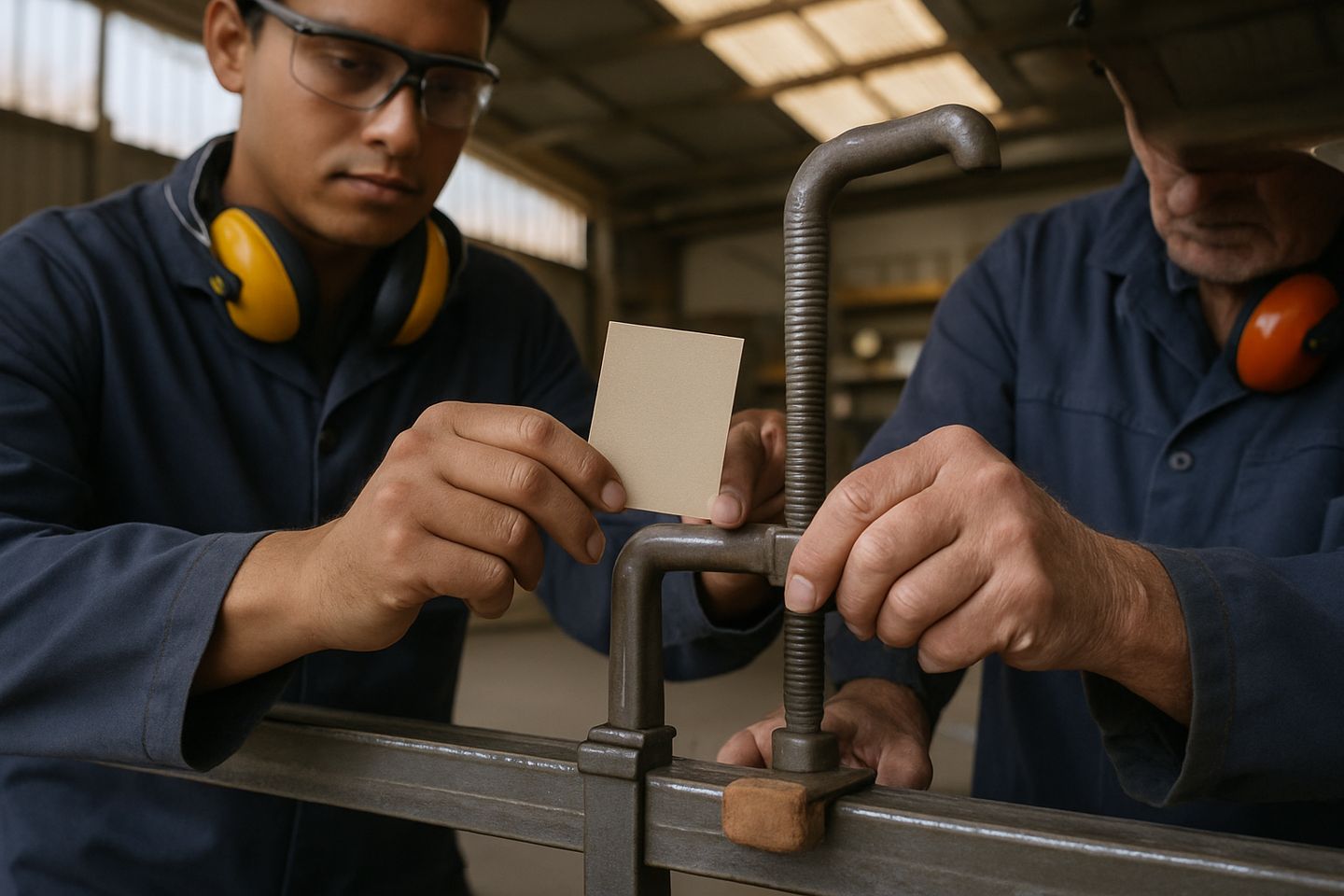
The clamp torque card is a simple, laminated sheet or poster that sits at each BenchMaster Pro or ClampRail System station. It lists the proven clamp pressures, jaw types and key checks for your main jobs, welding, tacking, cutting or layout. Supervisors or trainers usually fill in the main blanks when setting up a bay. Welders and fitters use it as a quick check before clamping work or passing a bay to the next shift.
New hands, learners and relief staff use the card to follow your standard clamp routine, reducing guesswork and costly clamp marks or slip-ups on steel. Even if you know the torque by feel, the card covers reminders that are easy to miss, like chain tension, dog grid inserts or swapping soft jaws for aluminium and painted work.
How to fill in the clamp torque card fields
Each card has clear fields for your main clamp setups and checks. Start by writing the job type (weld, cut, grind, fit-up), material (mild steel, stainless, aluminium), and preferred jaw type. Fill in the recommended torque or clamp pressure, your ClampRail System rails take up to 6 kN, but most jobs only need a firm hand-lock or 20 to 30 Nm for thin work.
Tick off the earth bond point (stud or direct to part), note any special steps like cleaning the clamp pad or checking jaw faces, and list any soft jaw or grid insert needed. There’s a box for quick PPE checks and a reminder to inspect the clamp rail for burnt pads or damaged threads.
- Job type and material (e.g. plate weld, tubing cut)
- Jaw choice (soft, serrated, aluminium, plastic)
- Torque or clamp pressure (in Nm or hand-tight)
- Earth return point (stud or direct)
- PPE and clamp face check
How a fab bay uses clamp torque cards month to month
Post the clamp torque card at every main bench or on the tool wall. At toolbox talks, run through the main settings for the week’s jobs and discuss any changes for new contracts or materials. During supervisor audits, check that fields are filled out and that clamps match the record on the card.
Use the card as a handover tool between shifts or temp teams. It helps avoid the old problem where someone forgets to tighten a load or leaves a hard jaw on a painted frame overnight. If its not up to date, log what’s missing and update before the next use. Over a month, the card becomes a simple record of what the team has actually done, rather than only what was planned.
Related on the floor
Request the PDF pack from Contact form.

Talk to FabMaster Workshop
Tell us about your bay and we'll come back with a practical kit list, or book a visit to our Sunnyrock fab floor in Germiston.