Job path
Marine brackets
Marine bracket fabrication calls for careful layout, corrosion control and certified welds, whether you work on the coast or inland. Strong prep and checks save headaches and warranty claims.
What marine bracket work involves
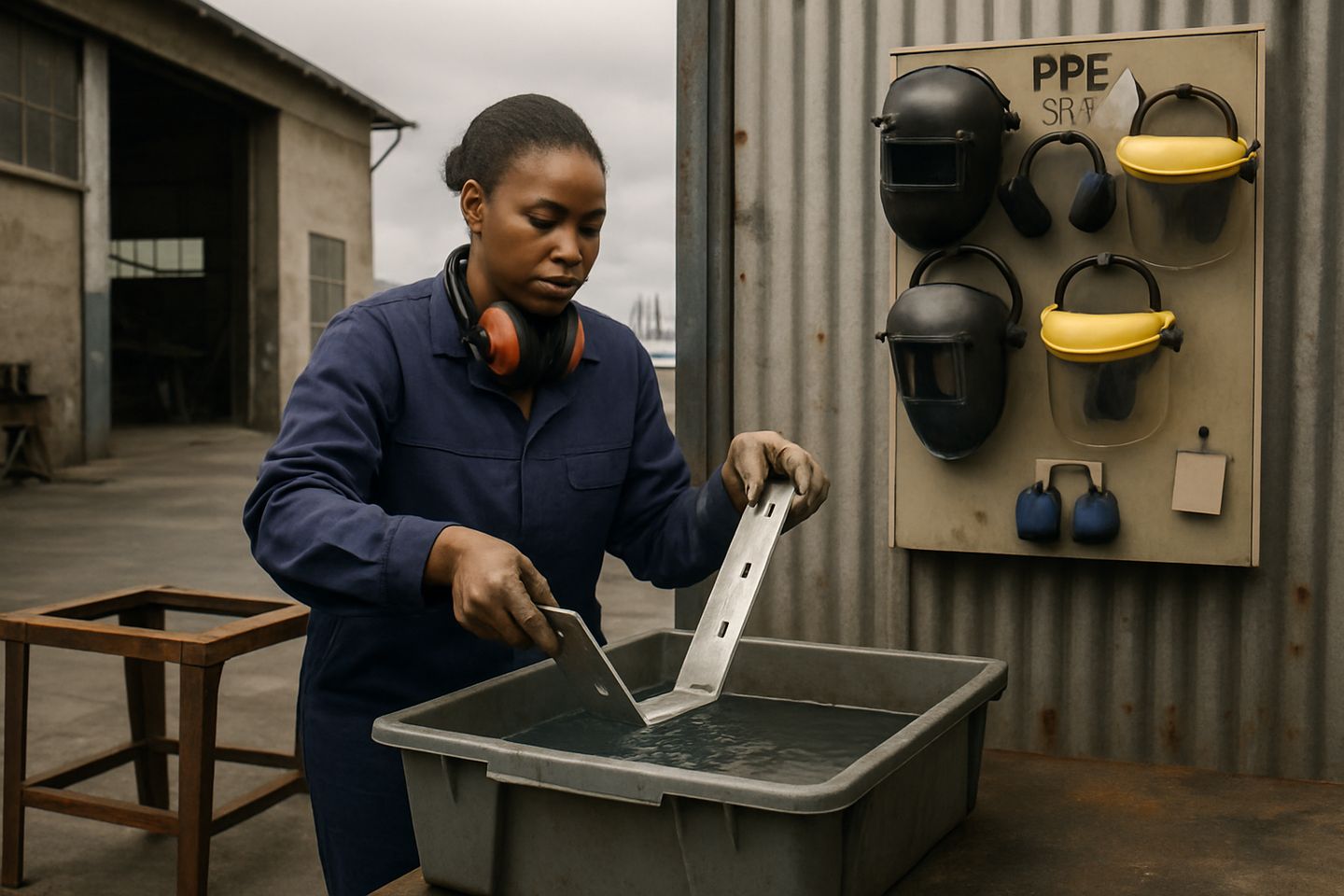
Marine brackets hold heavy loads and take a beating from salt spray, vibration and flex. Common jobs include mounting brackets for winches, mooring points, lifeboat davits, engine supports, and hull reinforcements. Most use 6 to 12 mm mild or galvanised steel, with some specifying 316 or duplex stainless for high-corrosion sites. Welds are often fillet type and need accurate leg length to avoid fatigue cracks.
Correct layout makes the difference between a clean fit and costly rework offshore. Brackets rarely sit flush unless you jig and check holes, bends and cut-outs before welding. Bolt patterns must match vessel drawings, and distortion from heat needs managing. Marine contracts often call for welders qualified to ISO 9606-1, and salt-prone jobs demand records that show every bracket met its spec.
FabMaster gear and fixtures that help
For accurate marking, our MeasureKit Fab sets include 150 and 300 mm callipers, precision squares and a fillet weld gauge kit, all in a foam case that survives bay drops. BenchMaster Pro workbenches with 50 mm dog-hole grids and M10 earth studs let you clamp awkward brackets at any angle, making tacking and full welds safer and faster.
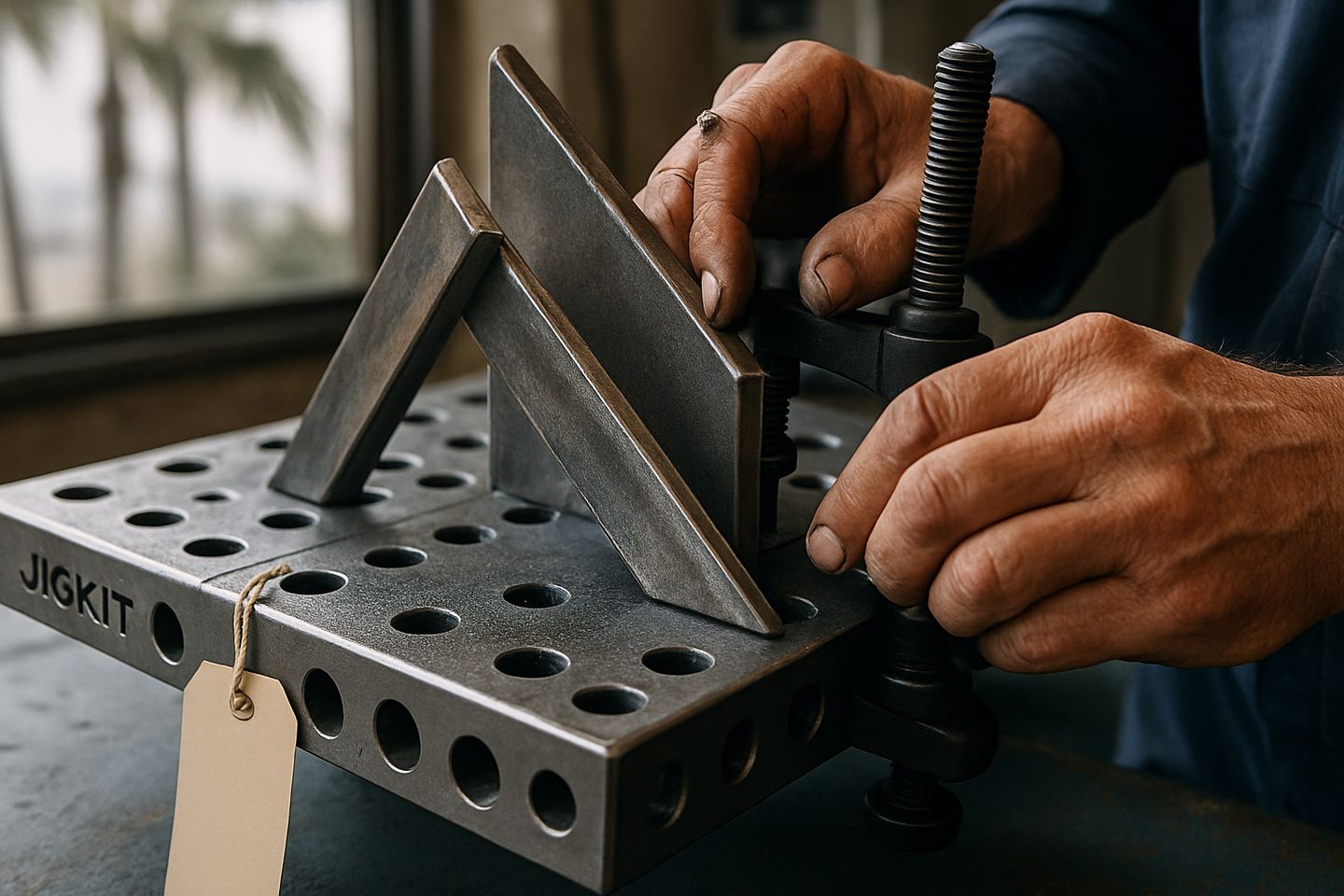
Add the JigKit Modular system for repeat jobs or batch runs. Its slotted plates and angle blocks line up holes, flanges and faces, and recipe tags help when teams swap shifts or parts. For rust control, keep earth bonds and clamps dry and inspect threads weekly, especially on the coast. TorchBay Station is your base for oxy-fuel or plasma cuts, with safe hose reels and clear tip racks to keep jobs organised and reduce fire risk.
- BenchMaster Pro with earth studs and grid
- MeasureKit Fab for repeatable checks
- JigKit Modular for complex shapes
- TorchBay Station for clean, safe cutting
How to run the job well in South African yards
Batch marine brackets in runs of at least four to catch setup errors early. Mark every blank with a unique job number, and use fillet weld gauges to check every weld before paint or galvanising. Coastal yards in Durban, Gqeberha or Cape Town must wipe down steel before layout, store clamps and jigs where they stay dry, and check that earth returns bite through any surface rust.
Welders should log their runs on a simple shift card. Keep records of welder qualifications (ISO 9606-1) and weld inspection results, especially for high-value contracts. Inland yards on the Highveld need to watch for dust build-up in clamp threads, and plan for the odd power cut. Every bracket batch should get a supervisor's signoff before shipping or hot-dip galvanising.
- Log weld runs on shift cards
- Check fillet welds while still on the bench
- Store fixtures and clamps off the floor
- Supervisor signoff before dispatch
Common mistakes that cause most rework
The costliest errors are skipped checks and rushed setup. Misaligned bolt holes and brackets out of square only show up during vessel fitment, leading to rework or scrapped parts. Missing earth bonding or a loose clamp can cause arc strikes or poor weld penetration.
Cutting with worn discs or blunt tips leaves rough edges that affect coating quality or lead to site rejects. Never skip weld records, especially for brackets going for certifying authority approval. Always check clamp rails, angle blocks and measuring gear for damage after each run to avoid drifting out of tolerance.
- Misaligned holes from poor layout
- Skipping weld checks before galvanising
- Letting rust or dust build up on clamps
- Not logging welder IDs and shift cards
Typical starting kit
Shopfloor note: Pre-weld measures that stick