Job path
Furniture metalwork
Furniture metalwork means welding and finishing tables, frames, counters and display units from steel and aluminium. Accurate joints and smooth finishes keep your work strong and presentable in busy retail and workspace settings.
What shopfloor furniture metalwork involves
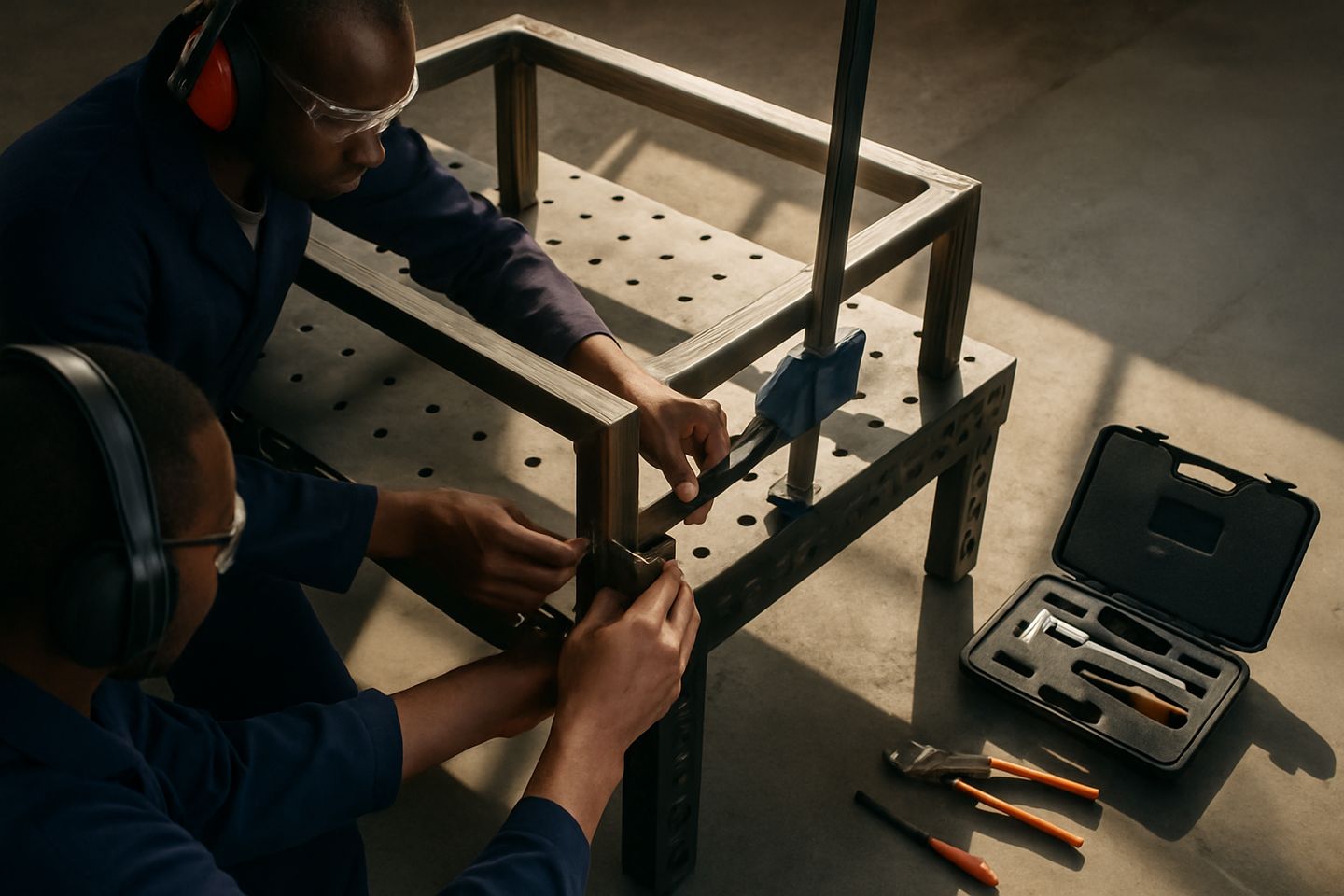
Furniture metalwork on the shopfloor covers welded steel and aluminium legs, frames, table bases, wall brackets and retail shelving. Most projects run on square or round tube, angle iron, and thin sheet for tops or decorative cladding. Mild steel is common for frames, but aluminium is used for office and hospitality jobs that need a lighter touch or corrosion resistance.
Jobs range from single prototypes to batches of 10 to 50, with seam and fillet welds on 1.2 to 3 mm material. Accuracy matters at every corner, if joints are even a millimetre out, the whole frame can rock or wobble. Clean welds and invisible grinding are expected, especially on parts that stay exposed or get painted and powder coated. Most shops use jigs or at least simple stops to keep assemblies square and repeatable.
FabMaster gear that makes furniture work smoother
The BenchMaster Pro bench gives you a flat working surface with 50 mm dog-hole grids for setting up repeatable stops and angle blocks. Earth studs keep your welding return point clean and close, crucial when working with painted tube or when you need to clamp direct to the part. The oil-black finish holds up well to repeated tack and grind cycles but still needs a quick wipe-down in coastal shops.
For clamping, the ClampRail System handles anything from delicate chrome tube to chunky mild steel frames, with soft or serrated jaws for different finishes. MeasureKit Fab keeps essential callipers and squares right at hand, helping you check frame diagonals and leg heights before final weld-up. For small batch runs, a basic JigKit Modular setup helps lock down frame corners and shelf heights, cutting down on tack-and-measure guesswork.
Soft-jaw clamp packs and spark skirt kits are worth adding to protect painted or powder-coated surfaces and contain sparks when finishing welds or grinding close to delicate edges.
- BenchMaster Pro for flatness and earth points
- ClampRail System for flexible holding
- MeasureKit Fab for on-the-bench checks
- JigKit Modular for repeat frames
How to run furniture metalwork well in South Africa
Batch sizes shift with the season, year-end and festive shutdowns mean larger orders for retail and hospitality, while winter can bring smaller, custom runs. On the coast, humidity rusts bare steel and clamp screws, so keep gear lightly oiled and use covered storage. Inland, Highveld dust means benches and rails need quick cleaning before setting up accurate frames.
Weld inspection is simpler than heavy structural work, but quality records still count. Keep weld logs and mark up frame tags for batch tracking; a shift log card from MeasureKit Fab helps. Use fillet weld gauges to check leg lengths on load-bearing joints. For jobs with painted or powder-coated finishes, record final cleaning and handling steps to avoid fingerprints or grinding marks.
For small shops, careful planning of power tool use helps to avoid lost time from a sudden outage. Set out a safe order for restarting welders and grinders, especially after a power blip.
Common mistakes and how to avoid rework
Frame distortion is the most common cause of rework. Too much heat, uneven clamping or poor jig setup lets parts move during welding, leaving tables or stands that rock. Take time to clamp every joint square and check diagonals before and after tacking.
Grinding too close to finished faces leaves scars that show through clear coatings or paints. Protect exposed surfaces with soft jaws, spark skirts and masking tape. Paint and powder coat touch-ups waste hours and often look worse than a clean first pass.
Skipping a final square check before dispatch leads to complaints and returns. Mark up inspection steps clearly on shift or batch cards to keep your team accountable and your work out of the scrap lane.
- Clamp before each weld, not only at the start
- Use soft jaws to save coated surfaces
- Check both diagonals before dispatch
- Tag batches for tracking and feedback
Typical starting kit
Shopfloor note: Soft jaws for painted tube