
Fixture
Thickness tag pack
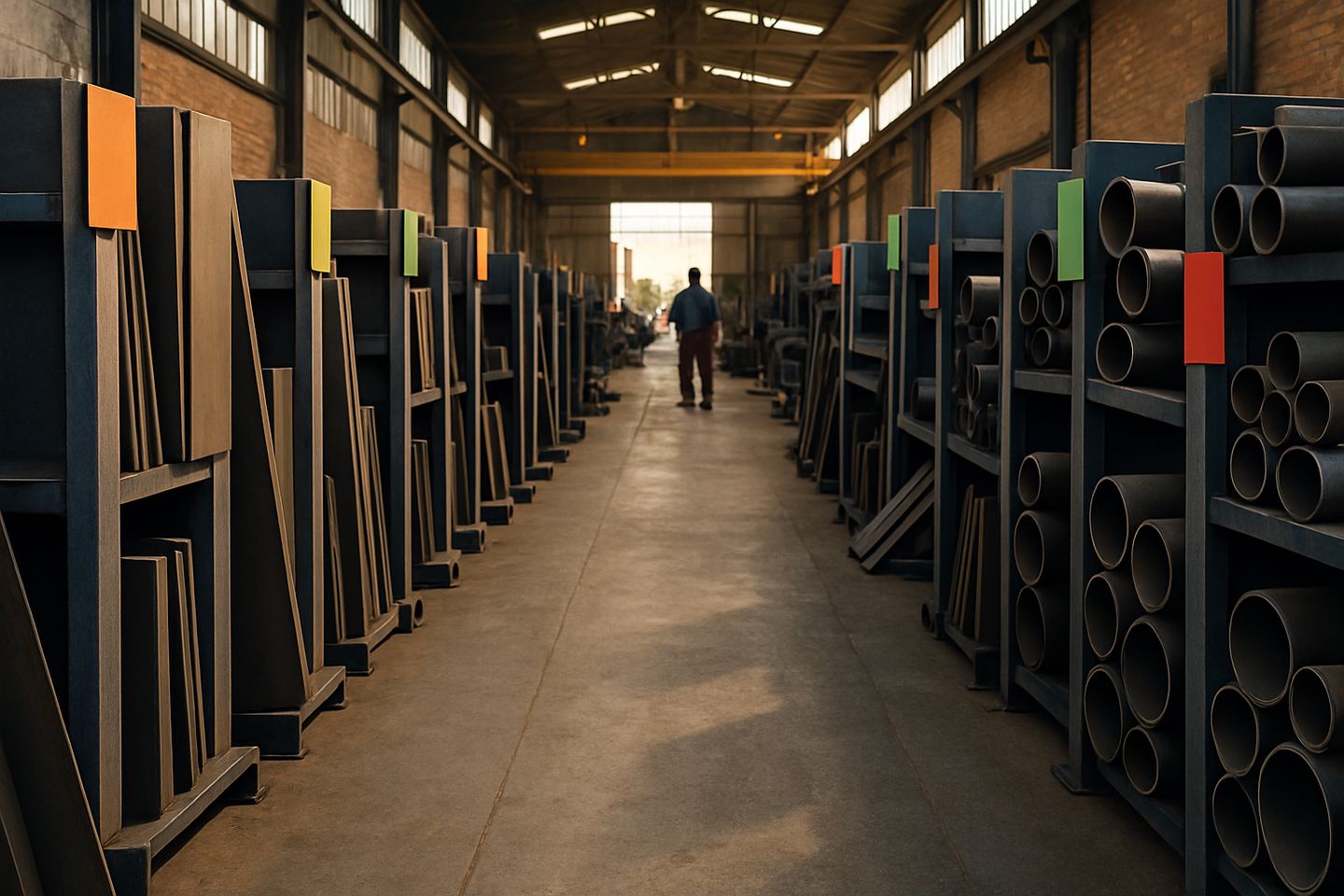
Our thickness tag pack gives you colour-coded mm tags for easy, accurate sorting of sheet, plate and tube in every ScrapRack Lane. No guesswork, no mix-ups.
What comes in the thickness tag pack
The thickness tag pack is a set of tough, brightly coloured tags marked in millimetres for easy identification of plate, sheet and tube thicknesses. Each tag is sized and punched to hang clearly on ScrapRack Lane bars or similar material storage racks.
Standard packs cover 1 to 12 mm, matching the thicknesses most common in steel fabrication, trailer and gate shops, training bays and general maintenance yards. Tags are colour-coded for fast visual checks and line up with many job card coding systems and kanban restock routines.
You can order custom ranges for less typical jobs, including heavy plate, light gauge, or specific aluminium and stainless sizes. The tags work with ScrapRack Lane but also suit many homemade and commercial steel racks.
How to use the tags for speed and accuracy
Match each ScrapRack Lane or material bay with a tag on its front rail, making sure the tag is visible from the picking aisle. Hang the tag at eye level so everyone can read the thickness without bending or reaching over stock.
Keep your tag set up consistent across all bays. Use the same colour and mm value for each thickness throughout your workshop to avoid confusion, especially between day and night shifts or in mixed-material jobs.
When unloading or restocking, move the tag with the material if you shift a whole stack to a new lane. Encourage all workshop staff, even senior trades or trainers, to check tags against job cards before cutting or picking steel.
- Hang tags before loading fresh stock
- Pair tag colours with job cards and kanban signals
- Replace any scuffed or unreadable tags right away
- Do a quick tag check before every shift handover
Care, spares and mistakes to avoid
Wipe tags regularly with a damp rag to remove dust, oil and grinding grit. On the coast, check for rust or salt in the tag punch-outs and swap any that start to fade or corrode. For high-traffic yards, keep a spare set in your Consumable Cart so you can replace lost or damaged tags as needed.
Do not use old paint-tin lids, offcut discs or handwritten scrap as tags. This causes confusion and slows down new team members, apprentices and visiting trainers. Always use clear millimetre numbers, never gauge or local names, to keep handovers sharp and cutting lists unambiguous.
Check that tags are never left hanging on empty lanes, as this leads to wrong picks. At stocktake or bay reorganisation, match every tag to actual material or remove it until the bay is restocked.
- Store spare tags in a dry, easy-to-find spot
- Print numbers big enough for low-light bays
- Train new staff to trust the tags, not memory
Related on the floor
What our Fabrication Gear customers say
Verified Google reviews

Talk to FabMaster Workshop
Tell us about your bay and we'll come back with a practical kit list, or book a visit to our Sunnyrock fab floor in Germiston.