Shopfloor note
Spark skirts that actually work
Spark skirts on the grind deck do more than keep sparks in one place. They protect people, gear and floors, and help keep your shop compliant and tidy.
The real risk of stray sparks and dust
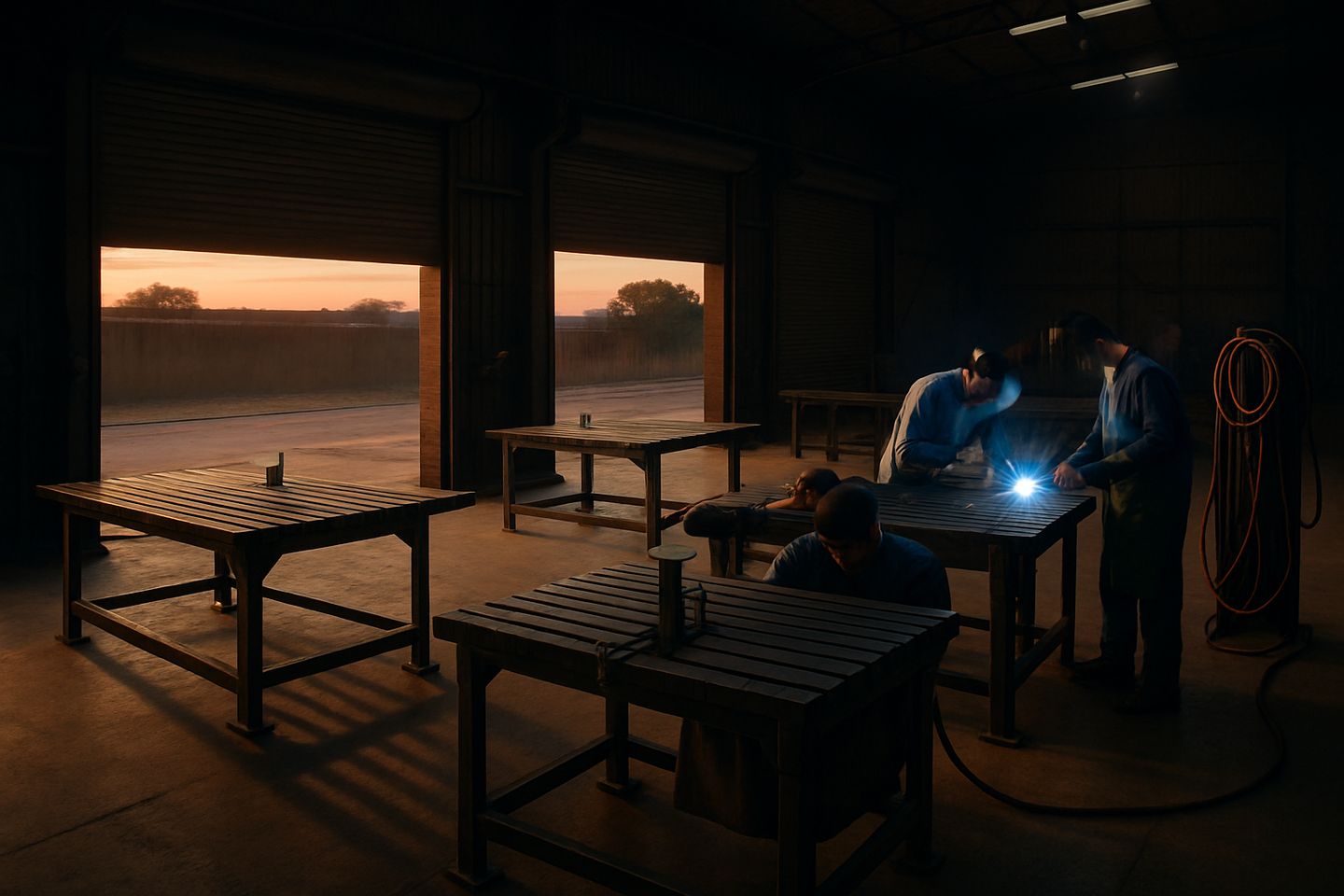
Every shop with a grinding deck knows the drill: sparks fly metres, discs throw grit and hot bits, and suddenly someone’s overalls or boots are scorched, or the PVC airline on the next bay has a melted patch. We see this most on big shared floors, trailer yards, college bays, or those double-shift municipal workshops where nobody’s always watching every corner.
It’s easy to underestimate how far grinding sparks travel. A single missed screen or damaged skirt can mean PPE gets burnt, paintwork ruined, or a small fire around cardboard or rags you meant to sweep later. Having proper spark skirts isn’t about ticking a box, it’s about keeping the busy flow of work safe and stopping those ‘almost’ incidents that can turn serious.
How we fit and check spark skirts for real protection
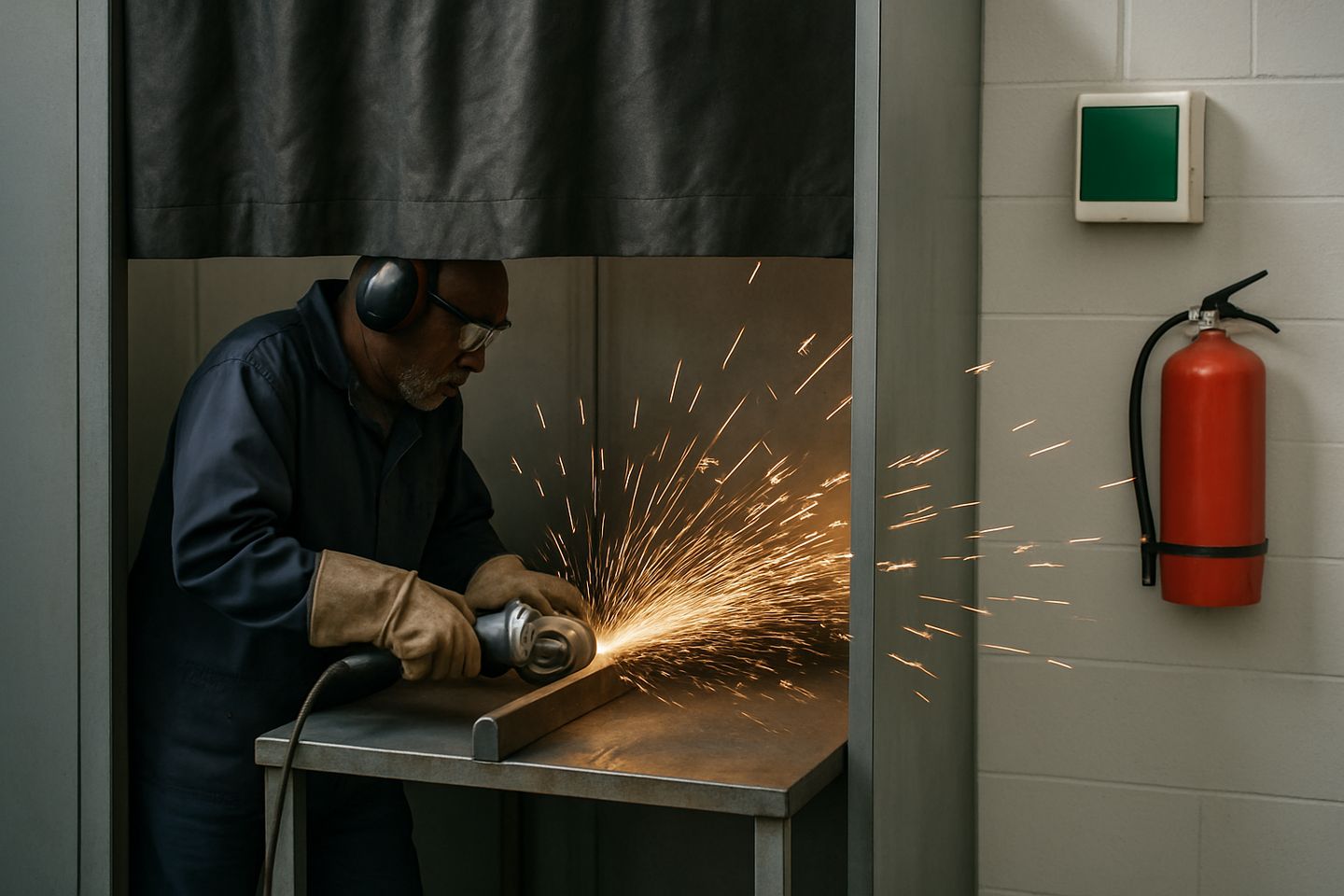
We use spark skirts on our GrindDeck Safe and similar bays by setting the skirt so it hangs right down to floor level, covering any gaps along the side and back. This stops sparks and swarf from escaping under the table or bouncing through to other bays or walkways.
First, check the skirt material: heavy rubber or layered canvas works best, rather than only a bit of tarp or shadecloth. Fix each section using the full mounting rail, no skipped clips. Once in place, run a broom handle along the inside to check it sits flush and doesn’t leave a gap for sparks to sneak by.
Fit the spark skirt so it can be lifted for cleaning but always sits back against the deck afterwards. In coastal shops (like our Durban and Gqeberha customers), give the skirt a wipe down now and then to stop rust and salt crust building up at the contact line.
- Hang skirt to floor with no gap
- Use full mounting rail, not cable ties
- Check skirt after every shift for burns or tears
- Keep broom or brush ready for quick clean-ups
Common mistakes to look out for
The most common slip is leaving a gap at the corner or under the deck, thinking it’s too small for sparks to get through. Sparks find a way, especially near the feet or where the deck isn’t level. Double-check the skirt after people sweep up or move bins: sometimes it doesn't get put back flat.
Another mistake is patching holes in the skirt with tape or a scrap instead of replacing a burned section. Tape peels in the heat, and a weak patch will let sparks through. Watch for faded or stiff sections, old skirt material can split under a boot or get brittle in Highveld winters.
How to bring spark skirts into toolbox talks
Include a quick check of spark skirts in your weekly toolbox talk. Ask the team if they’ve seen any gaps, burns or spots where the skirt rides up. Show them how to drop it back in place after cleaning or moving anything under the bay.
If your skirt system isn’t keeping sparks in, or you need a spark skirt kit for a new deck or an awkward bay shape, send us a message through our contact form. We’re happy to help with skirt kits, mounting rails or advice for busy shared floors.