JigKit Modular specifications
JigKit Modular plates, slots, and angle blocks make it easy to set up repeat fabrications and fixtures for training, frame work, and small production runs.
What each JigKit Modular spec means on your floor
JigKit Modular uses steel jig plates in three thicknesses: 6, 10, and 12 millimetres. The 6 mm plate handles lighter bracket work, tag welding, and basic training joints. The 10 mm plate is a good all-rounder for light to medium structural frames, gate uprights, smaller trailer assemblies, and repeat fixtures. The 12 mm plate is built for heavier fabrication, think small chassis rails, stand-alone workshop jigs, or parts that need bolted clamps for welding and grinding.
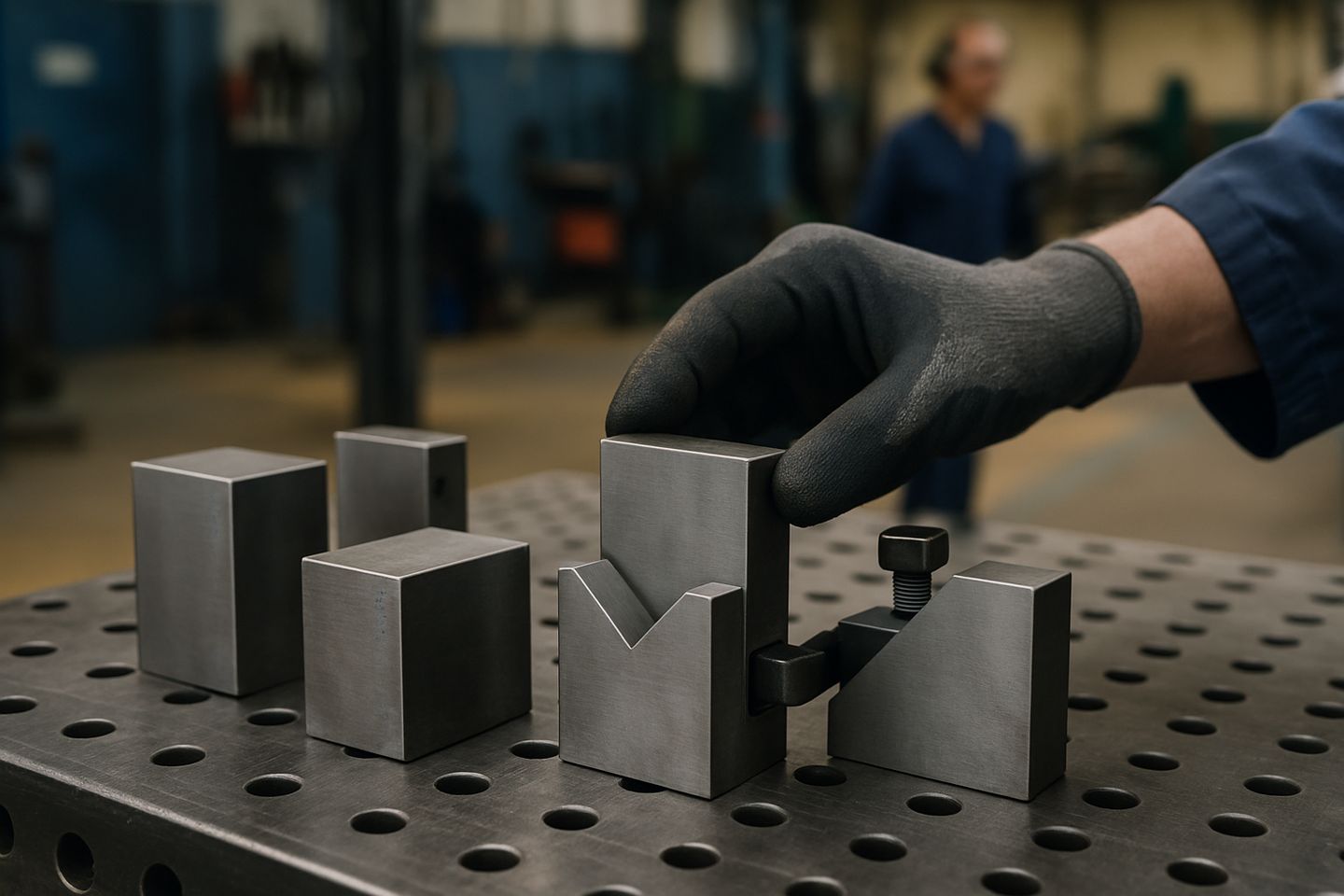
Every plate is slotted with a 12 mm grid for positioning clamp dogs and stops. This lets you lock down square, angled, or irregular pieces quickly. Angle blocks in 30, 45, 60, and 90 degrees let you set up mitred corners, gussets, or connection plates without error. Recipe tags help crews repeat a setup by linking the job SKU to the right plate holes and blocks, ideal for short-run production or TVET training where consistency matters.
- 6 / 10 / 12 mm plates suit different loads
- 12 mm slots fit most fab clamps and dogs
- Angle blocks for 30, 45, 60, 90 degree joints
- Recipe tags keep setups repeatable
Loads, materials and limits in workshop use
JigKit Modular is meant for steel, aluminium, and stainless assemblies up to about 60 kg per plate (6 mm), 120 kg (10 mm), or 160 kg (12 mm), assuming the plate is fully supported on a flat workbench. Overloading a thin plate may cause it to bow or twist, especially on saw horses or uneven benches.
Avoid using JigKit Modular for heavy-duty subframes, thick-section beams (over 80 mm), or projects needing hydraulic pressing. The slots take M12 bolts and standard clamping dogs, but keep grinding and hammering away from the jig plate as far as possible to prevent warping or slot flare. Do not use for oxy-fuel cutting, as the slot edges are not designed for direct flame or heat.
How to size and choose JigKit Modular for your bay
Start by mapping out your most common jobs: if you run small frame batches, balustrades, gates, or training weldments, most shops use one or two 10 mm plates each about 600 by 800 millimetres, plus a set of angle blocks. Training bays often go for two 6 mm plates and a shared angle block set, which keeps costs and weight down while covering the basics.
For a bay that does heavier work or where jigs are left set up for days, choose the 12 mm plate for extra rigidity. If you need to switch between multiple job types, use recipe tags with each setup so crews can rerun jobs without guesswork. Our team can advise on layout and tag packs that match your job mix, just send us a message through our contact form to get started.
Related on the floor
Specification table
| Plates | 6 / 10 / 12 mm |
|---|---|
| Slots | 12 mm |
| Angles | 30 / 45 / 60 / 90 |
| Tags | SKU recipes |
| Use | Repeat frames |
Use our contact form for a tailored footprint.