
JigKit Modular fixtures
JigKit Modular fixtures help South African workshops set up quick, repeatable jigs for gates, trailers and batch parts on any steel-topped fab bench.
Choosing the right JigKit Modular fixtures for your bay
JigKit Modular comes in 6, 10 and 12 mm jig plates, each sized for typical shop tops and weld tables. Use thicker 10 or 12 mm plates for heavy gates, frame assemblies or trailer sides that need to stay rigid during welding. The 6 mm version suits lighter parts or short production runs, making it easier to shift or store between jobs. Pair these plates with our angle block set for quick 30, 45, 60 and 90 degree stops, or slot in dog grid inserts for odd-shaped pieces that need extra holding points.
For holding multiple parts, combine several jig plates side by side and tag them with our recipe tags. This keeps clamps, angle blocks and stops set up for the same job between shifts. Add dog grid inserts when you need to clamp round or angled work, and use earth bond plates for a direct welding return path on the fixture itself. Kanban card sets help track fixture parts back to the correct spot after a shift or bay changeover.
- 6, 10 or 12 mm jig plates
- Angle block set (30 to 90 degree stops)
- Dog grid inserts for flexible clamping
- Earth bond plates for safe return paths
- Recipe and kanban cards for organisation
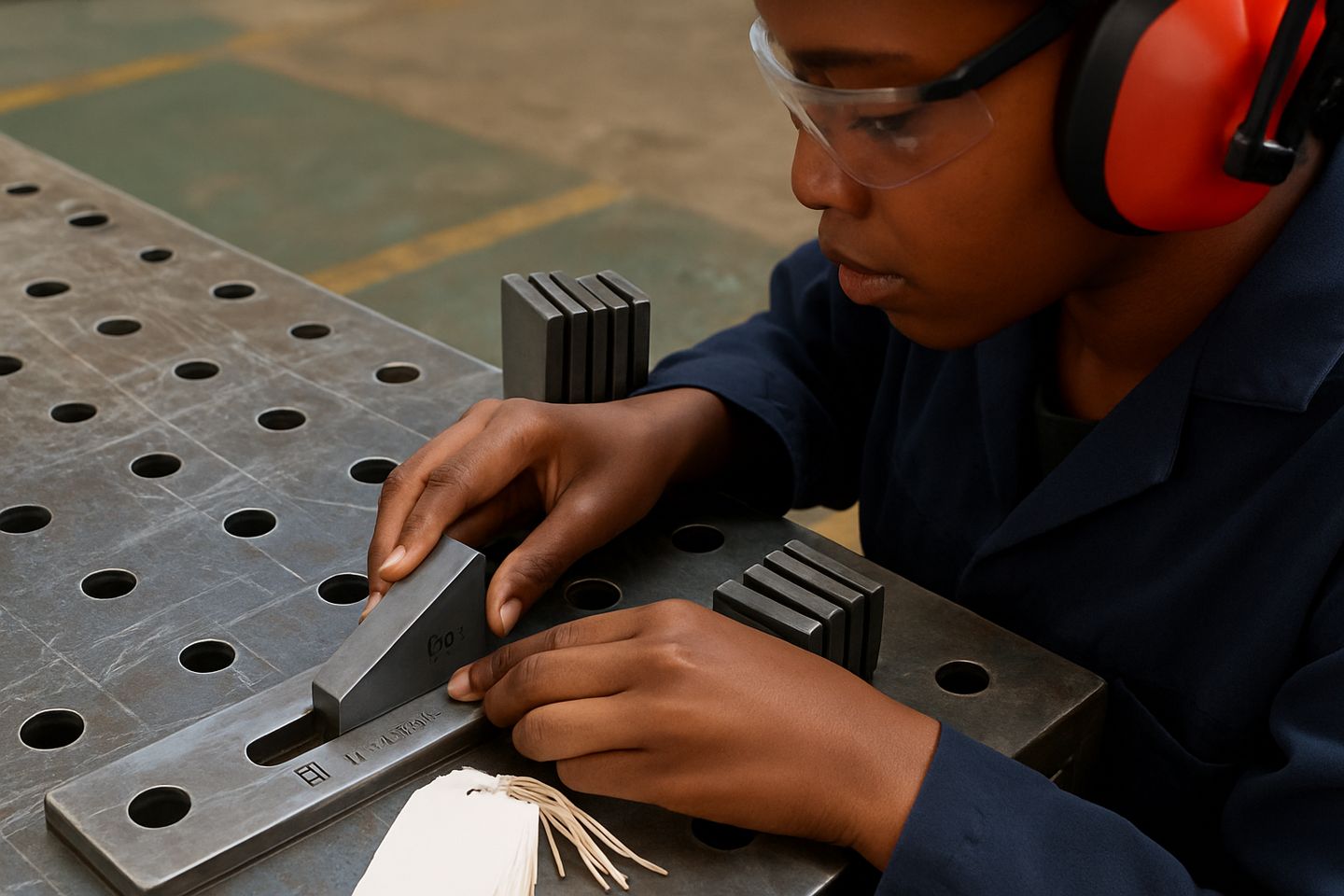
Setting up repeatable arrangements for batch fabrication
Start by prepping a clear bay with your main jig plates bolted down or dogged into the BenchMaster Pro top. Align the first plate with square fence kits or layout rails, then add angle blocks at key corners or bends. For batch work like gates or trailer parts, use identical stops and blocks for each piece, so every part lands in the same spot and angle.
Record your fixture set-up on a recipe tag and fix it to the jig or the bay. This lets any shift or team repeat the layout with the same stops, blocks and clamp positions. For longer runs, mark out wear points and replace soft jaws or grid inserts before they get chewed up. If you have rotating welders or students, walk the next team through the set-up at handover to keep the batch consistent.
- Bolt or dog jig plates to bench top
- Clamp parts with identical angle blocks
- Mark and record set-up on recipe tags
- Replace worn jaws or inserts ahead of schedule
Common fixture mistakes on South African fab floors
We often see jigs left loose on the table or not bolted down, which leads to parts creeping out of square as soon as you start tacking. Forgetting to fit earth bond plates on the fixture can cause poor arc starts, erratic welds or even current passing through hinges and chains, damaging bearings or shop gear.
Another regular slip-up is mixing up angle block positions, especially after a quick clean or swap between jobs. Always tag your fixture arrangement and use the kanban cards to track each accessory. Dirty or pitted jig plates are another issue on coastal sites, where humidity rusts slots and reduces clamp grip. Wipe down plates after use, and keep blocks and jaw faces free of weld spatter for the next batch.
- Never leave jigs loose on bench tops
- Always use earth bond plates for welding
- Tag and track block positions between jobs
- Clean jig plates and clamp faces after each batch