
Layout Table XL fixtures
Layout Table XL fixtures help South African workshops block, square and repeat jobs with confidence. Get the most out of your 3-metre layout setup.
Which Layout Table XL fixtures fit and when to use them
The Layout Table XL takes our square fence kit, measuring rail, and grid-inserted angle blocks for precise, large-format jobs. The square fence kit bolts to the 3-metre top to create a true reference edge. Use this for frame assemblies, sheet layout and when you need a consistent square each time you build.
Angle block sets and grid inserts slot directly into the table, locking workpieces quickly for tacking, marking or welding. When making bulk parts like balustrades, trailer sides or municipal frames, these fixtures stop drift and help new hands keep to spec. For longer runs, clamp the measuring rail to set repeated stops down the full length of the table.
Add thickness tag packs and recipe tags for multi-size batches. These help shift teams keep track of the setup, which is especially useful in busy yards, colleges or repair depots.
- Square fence kit: side and end referencing
- Angle block set: fast 30, 45, 60, 90 degree setups
- Grid inserts: lock fixtures anywhere on the top
- Measuring rail: consistent length stops
- Thickness tags: visual part tracking
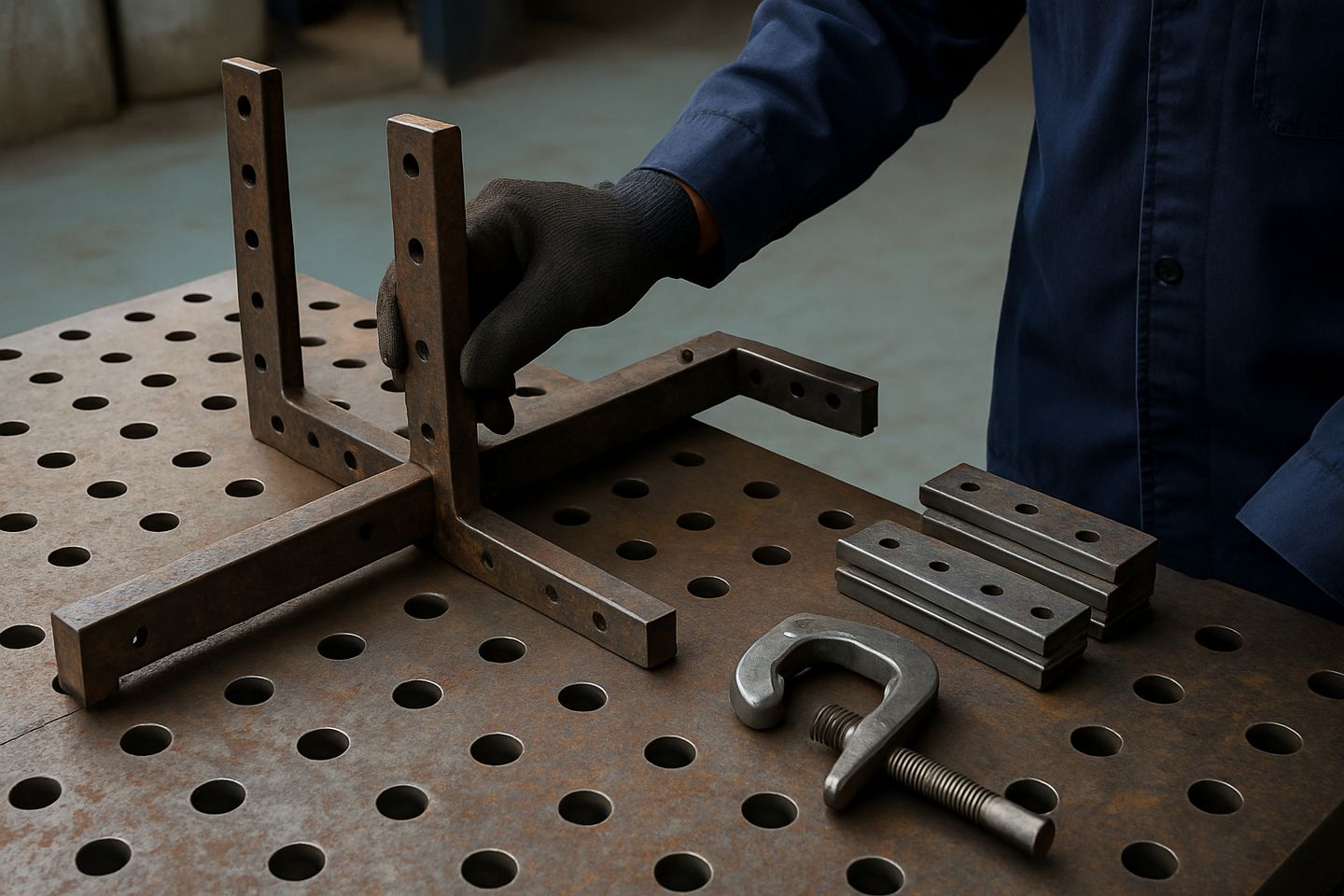
Setting up repeatable fixture arrangements for batch work
Start by squaring the fence kit to the table edge using a certified square, then lock it down firmly. Place angle blocks at the corners or reference points where repeat work stops are needed. For multi-bay shops, mark each station’s fixture plan using recipe tags and colour-coded thickness tags to match the job card.
Use the measuring rail for consistent part lengths. Position grid inserts for intermediate stops or to hold small brackets. Always tighten fixtures down before moving heavy parts or starting welds. For larger assemblies, double-check squareness across the full width and length, as small errors multiply on three-metre jobs.
Operators should check for any loose fixtures before each shift. If different teams use the bay, write shift handover notes on the recipe tag to avoid confusion and wasted time.
Fixture mistakes we see on South African fab floors
Common errors include leaving grid inserts loose or failing to lock fence kits square, which leads to creeping errors on repeat builds. Some teams skip the measuring rail and eyeball part length, causing minor but costly mismatches, especially on large gates, trailers or frames.
We often see mixing up thickness tags or not updating recipe tags during shift change. This slows batch work and means rework or confusion for new operators. At the end of the shift, always clear the table and check the fixture set matches the next batch card. Don’t let power cuts or a quick restart rush your checks, most fixture mistakes happen when teams are under time pressure.
Lastly, always inspect clamps and inserts for wear or damage, especially in coastal yards where rust can seize parts. Replace any worn items before batch work starts.